Where This Job Goes Sideways
Most calls we get in Royal Oak don't start as a repair call. They start as a door that worked fine yesterday and won't budge today.
Aging housing hardware
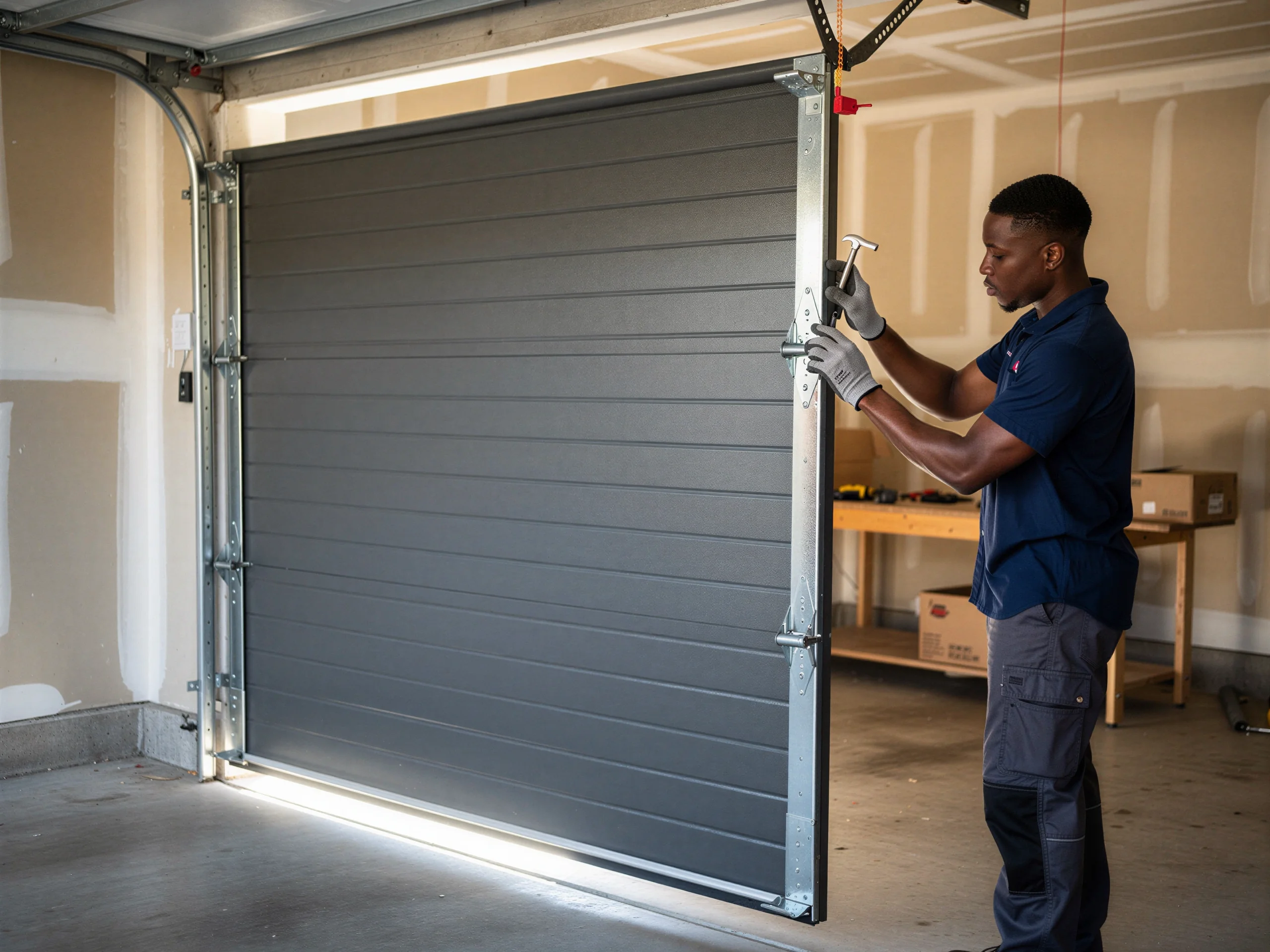
The reason it goes sideways here more than in newer subdivisions is the age of the housing. Royal Oak's stock runs 1938 to 1990 with a median build year of 1957, and a lot of that original garage hardware is still in the opening, patched over decades instead of replaced.
Brittle cold-morning springs
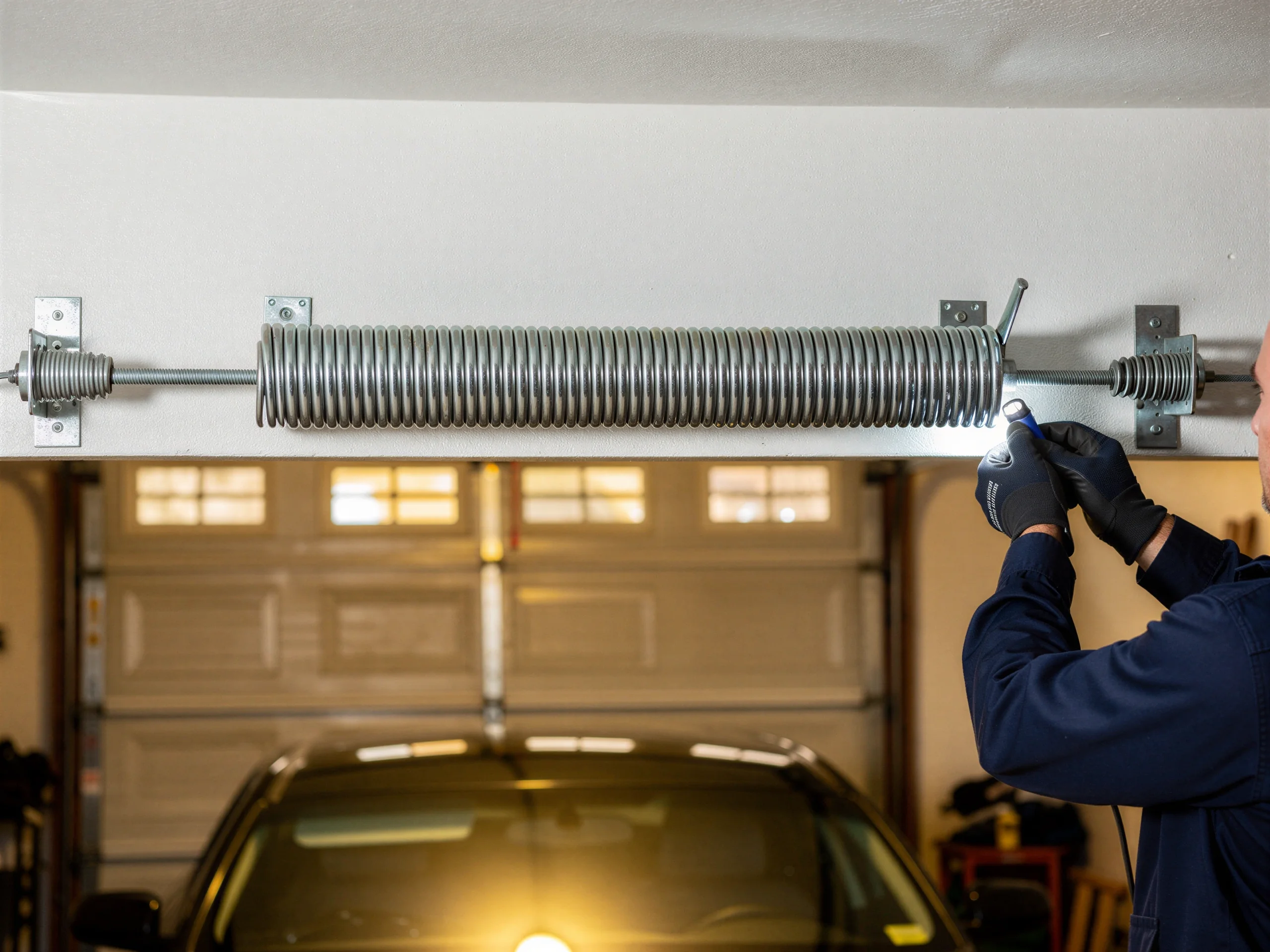
A torsion spring rated for 10,000 cycles back in the Eisenhower administration doesn't care that nobody's kept records on it. It just lets go, usually on the coldest morning of the year, because cold steel is brittle steel.
Mismatched spring sizing
We see the same pattern on pre-1960 one-car garages across town: short headroom, narrow track spacing, and spring sizing that was never updated when a heavier insulated door got swapped in at some point. That mismatch is what turns a quiet Tuesday into a door stuck halfway up with a cable off the drum.
What You Are Seeing
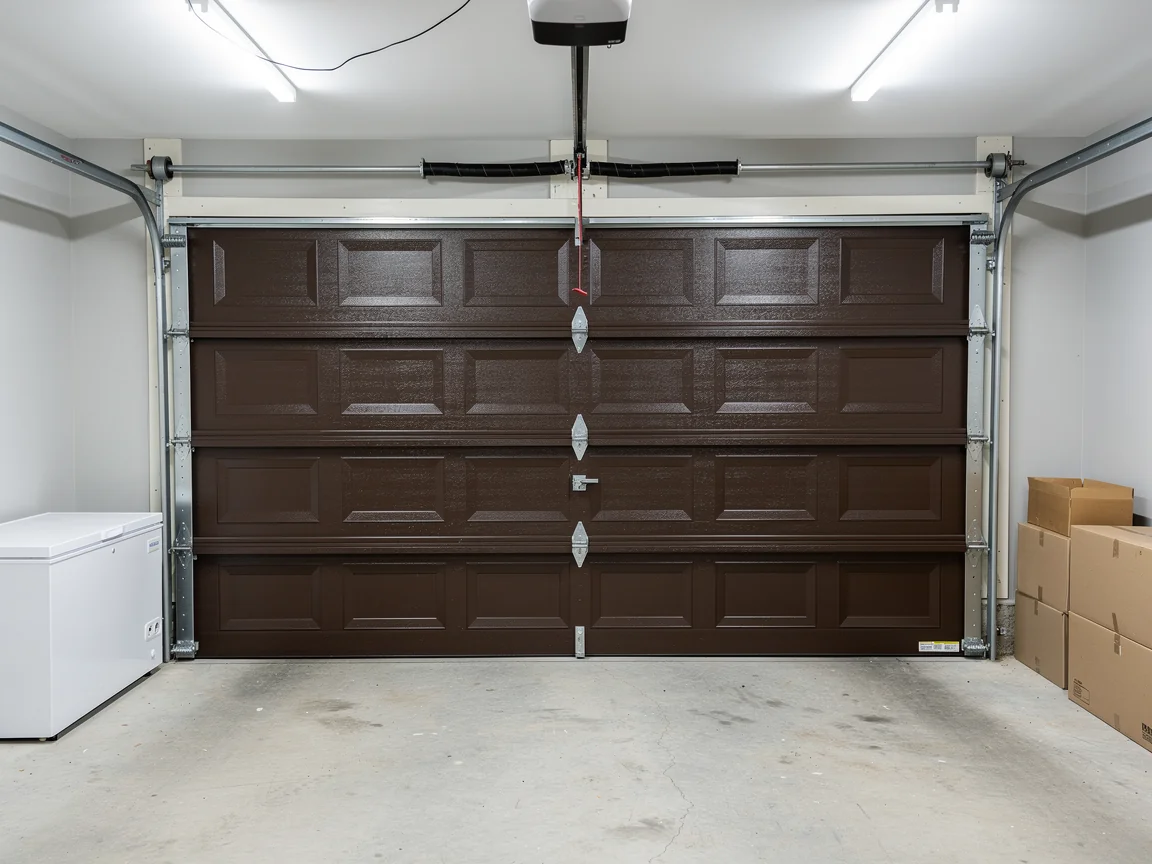
The door won't open past a few inches, or it opens and then drops on one side. Sometimes it's a loud bang from the garage followed by the door sitting dead in the track - that's almost always a torsion spring letting go. On older systems with a single center spring instead of the newer dual-spring setup, that failure is total; there's no backup holding the weight. Other owners call because the opener runs but the door doesn't move, which points to a stripped gear or a cable that's jumped the drum, both more common on original side-mount hardware than on newer extension systems. In Royal Oak's cold-severe climate, the symptom often shows up first thing in the morning when overnight temperatures have stiffened the lubricant and tightened tolerances on parts that were already worn thin. By afternoon, once things warm a few degrees, the same door might limp along again - which fools people into thinking it fixed itself.
What the Fix Involves
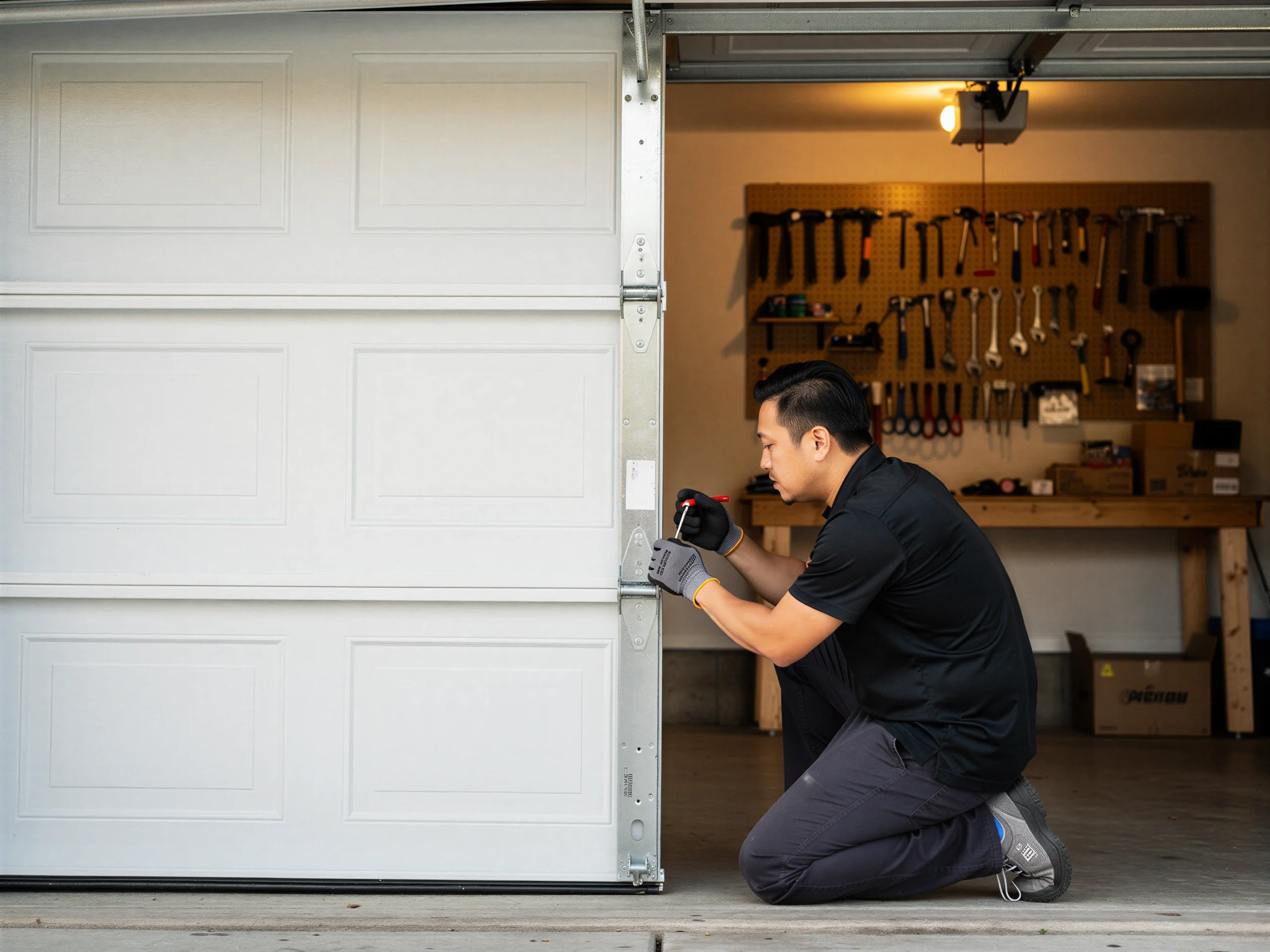
Spring replacement on a pre-1960 door usually means matching wire size and wind to hardware that predates the sticker on the spring itself, since the original spec plate is long gone on most of these.
Weight measured on site
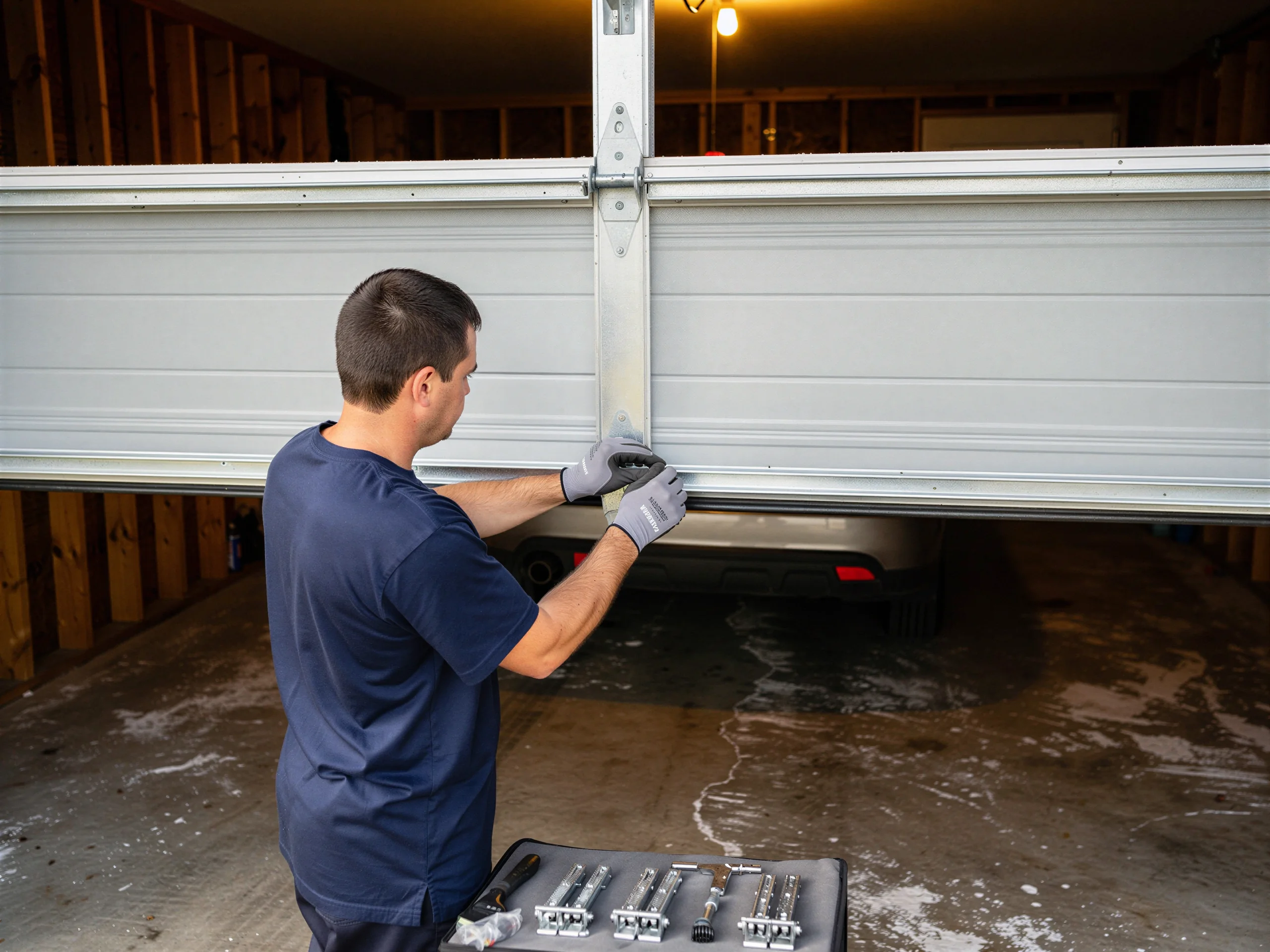
We measure the door weight and track geometry on site rather than guessing from the house's age alone - two houses built the same year on the same block can have different door weights if one was replaced at some point.
Replace worn companion parts
If the drums, cables, or center bearing are original, we replace those at the same time; putting a new spring on a worn bearing just moves the next failure out a few months.
Structural failure first
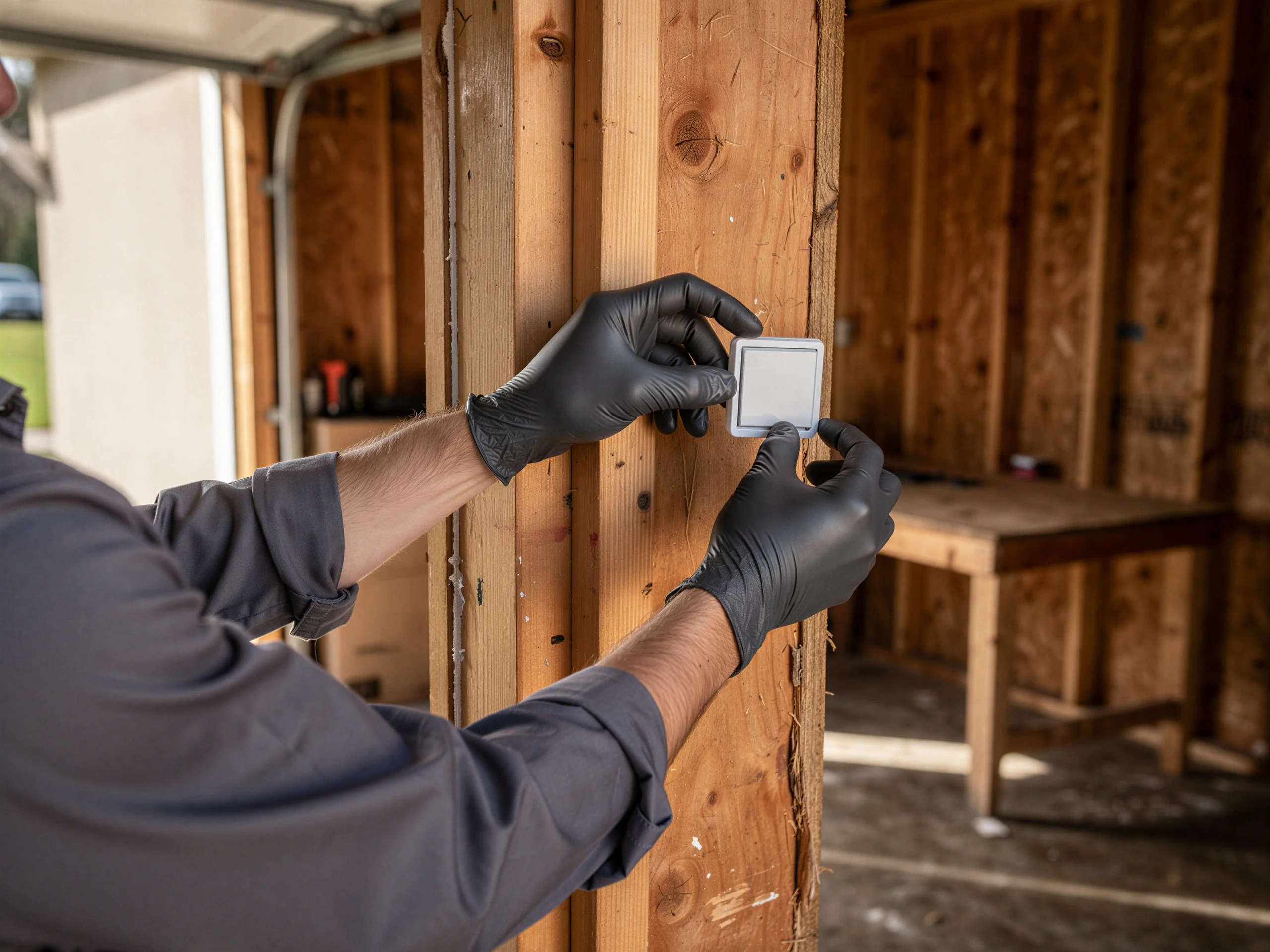
We do not recommend patching a cracked wood jamb or badly rusted track just to save the spring job - if the structure around the opening has failed, the new hardware won't hold any better than the old did, and that's a conversation we have honestly before any work starts.
What Causes It Around Here
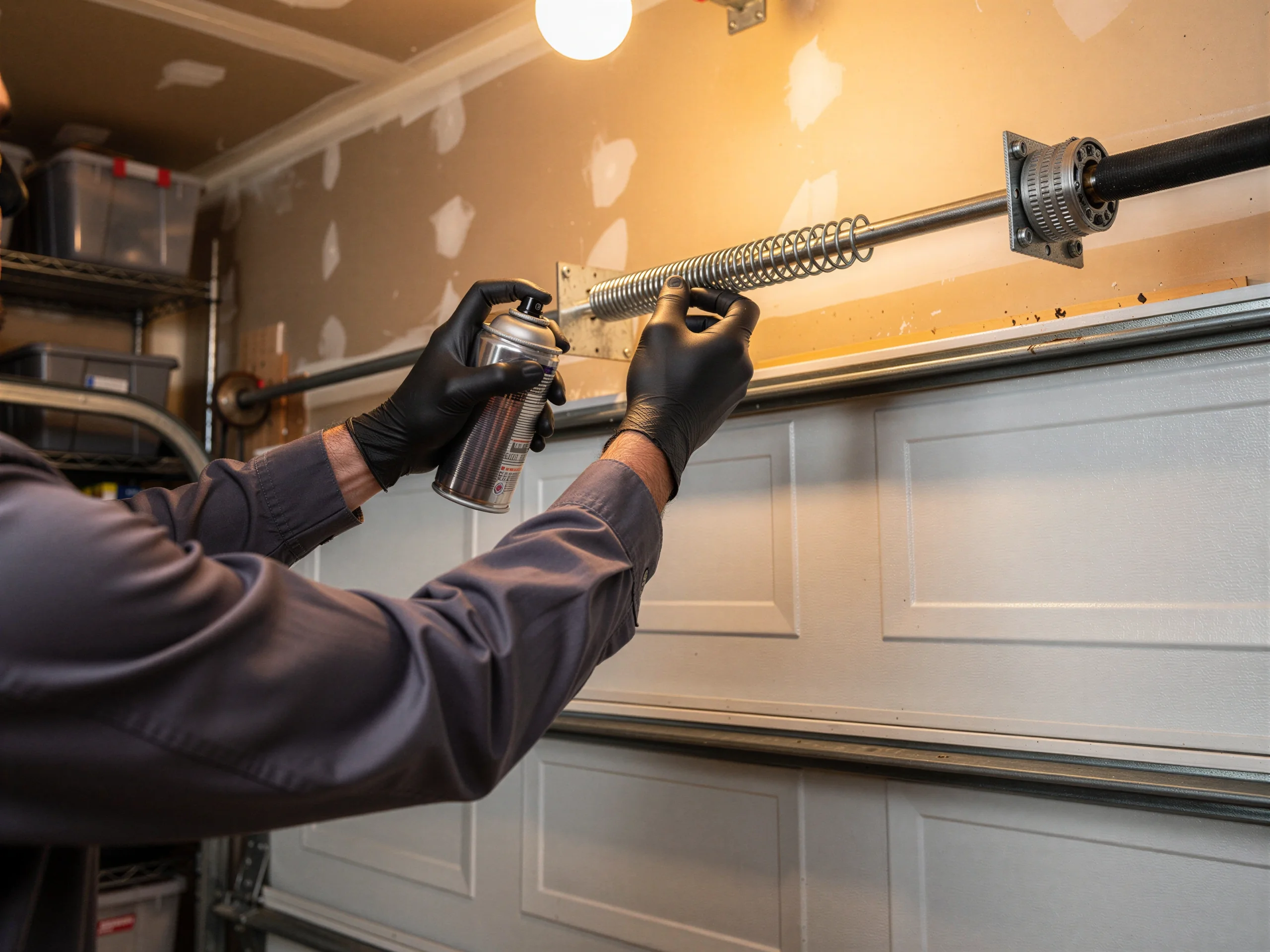
Two things stack on each other in Royal Oak: the age of the housing and the cold. With median construction at 1957 and most neighborhoods falling in that pre-1960 window, a huge share of garages were built with hardware specs from an era before insulated steel doors were standard. When those doors got upgraded over the years, the springs often didn't get upgraded with them. Add a cold-severe climate where steel contracts and hardens through a Michigan winter, and you get metal fatigue showing up faster than it would in a mild climate on the same-age hardware. We see it consistently across the area, not just in one neighborhood - this is a housing-stock issue layered on a weather issue, and it doesn't resolve itself with a can of spray lubricant.
Talk to a local pro
Garage door service in Royal Oak?
Same-day service with honest, upfront quotes.