Where This Job Goes Sideways
Opener repair looks simple until you're standing on the ladder. Most of the trouble calls we get aren't about the opener unit itself - they're about what it's bolted to.
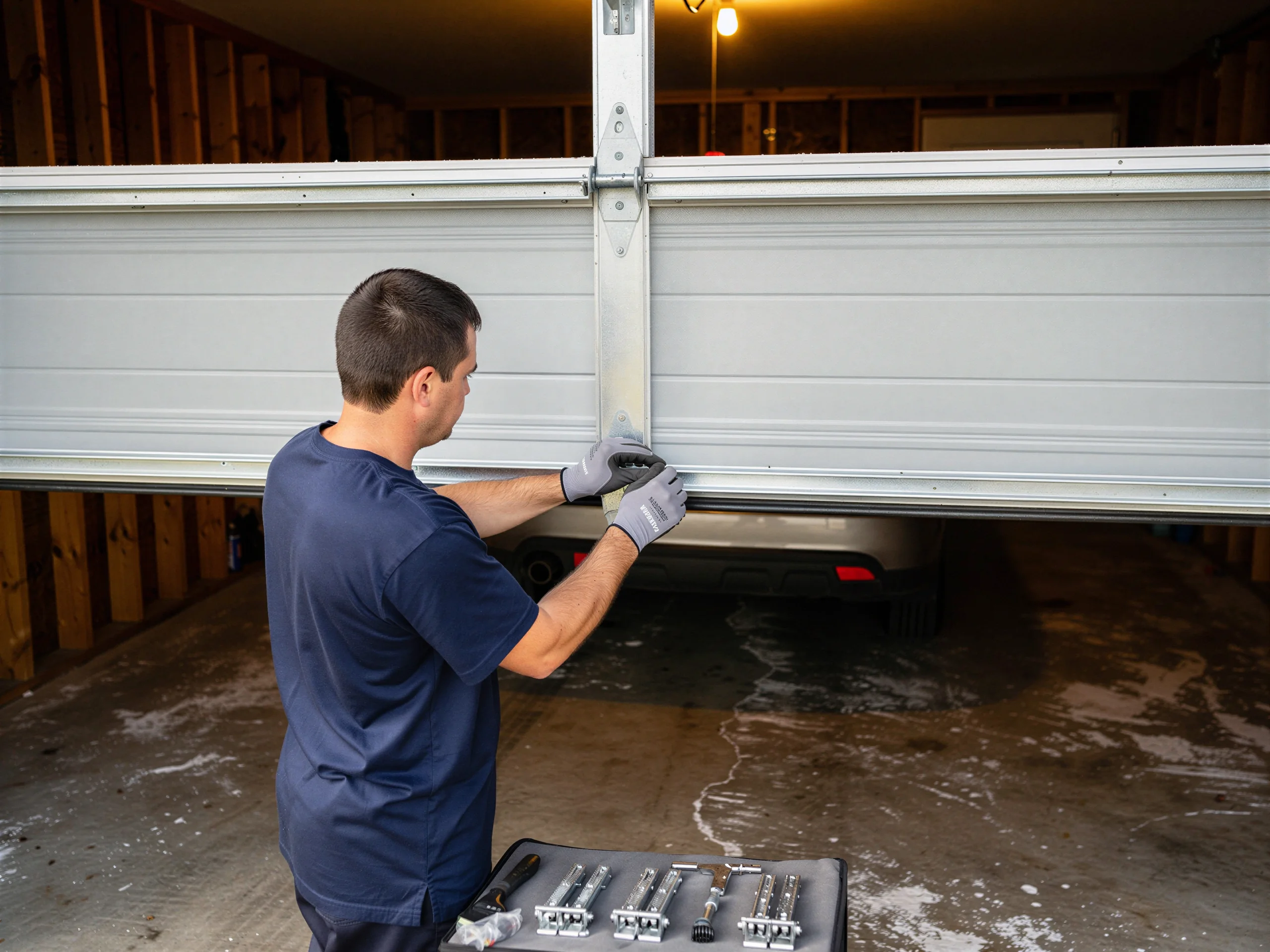
Outdated mounting brackets
Royal Oak's housing stock went up mostly between 1938 and 1990, with a median build year of 1957, so a huge share of the ceiling brackets and header boards an opener hangs from predate every modern mounting spec. Swap in a new opener without checking that structure first and you've got a unit that strains, drifts out of travel, or pulls loose within a year.
Earlier sensor retrofits
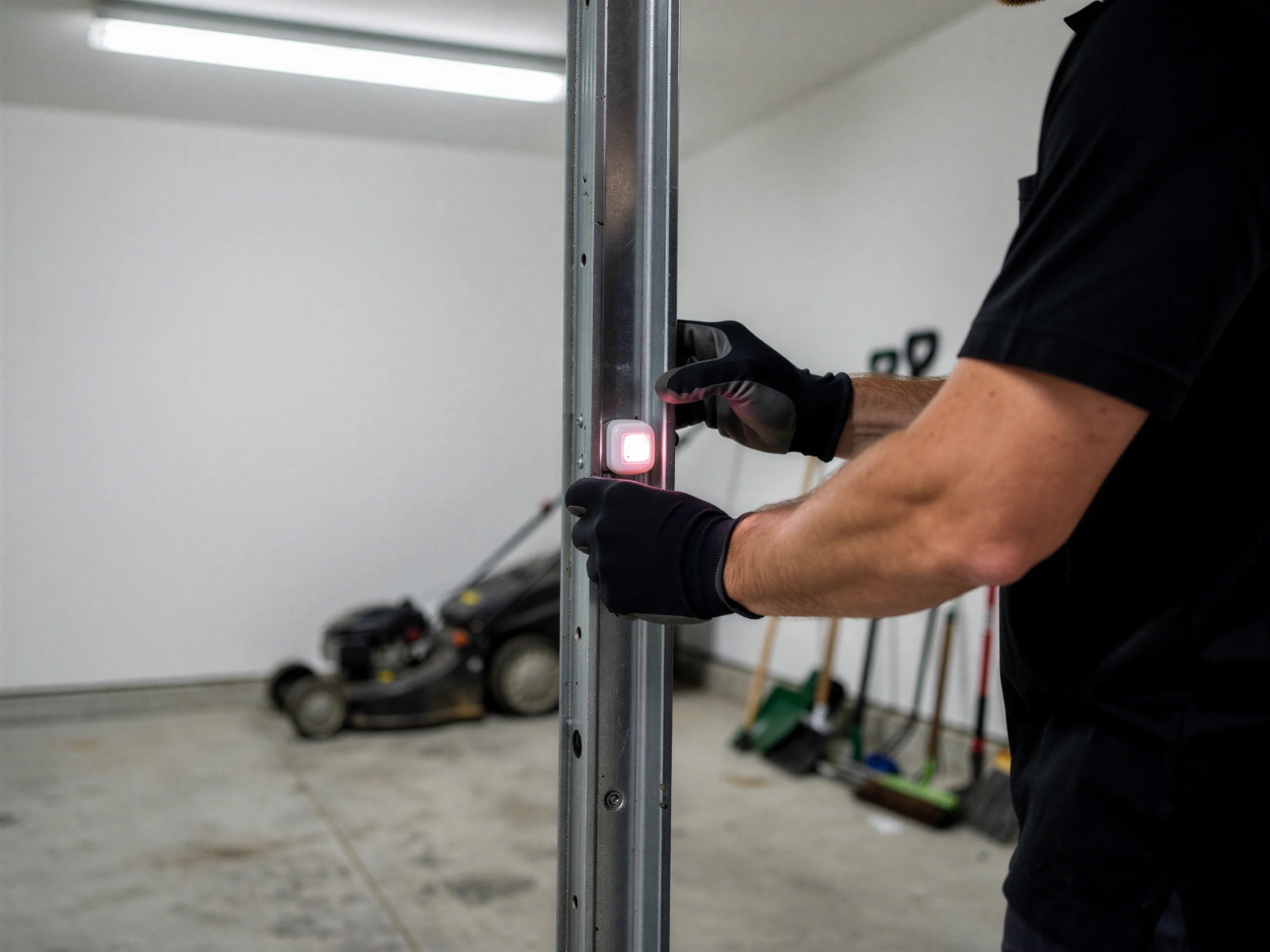
The other place this goes sideways is the safety sensors. Original openers from the 70s and 80s in this area often got replaced once already, sometimes by a previous owner, sometimes by whoever was cheapest at the time, and the wiring behind the wall plate can be a patchwork of splices nobody labeled.
Diagnose before quoting
We won't quote a repair over the phone sight unseen - we open the housing first, because half the 'opener is dead' calls turn out to be a logic board that's fine and a sensor eye that's been nudged or caked in winter salt film.
What You Are Seeing
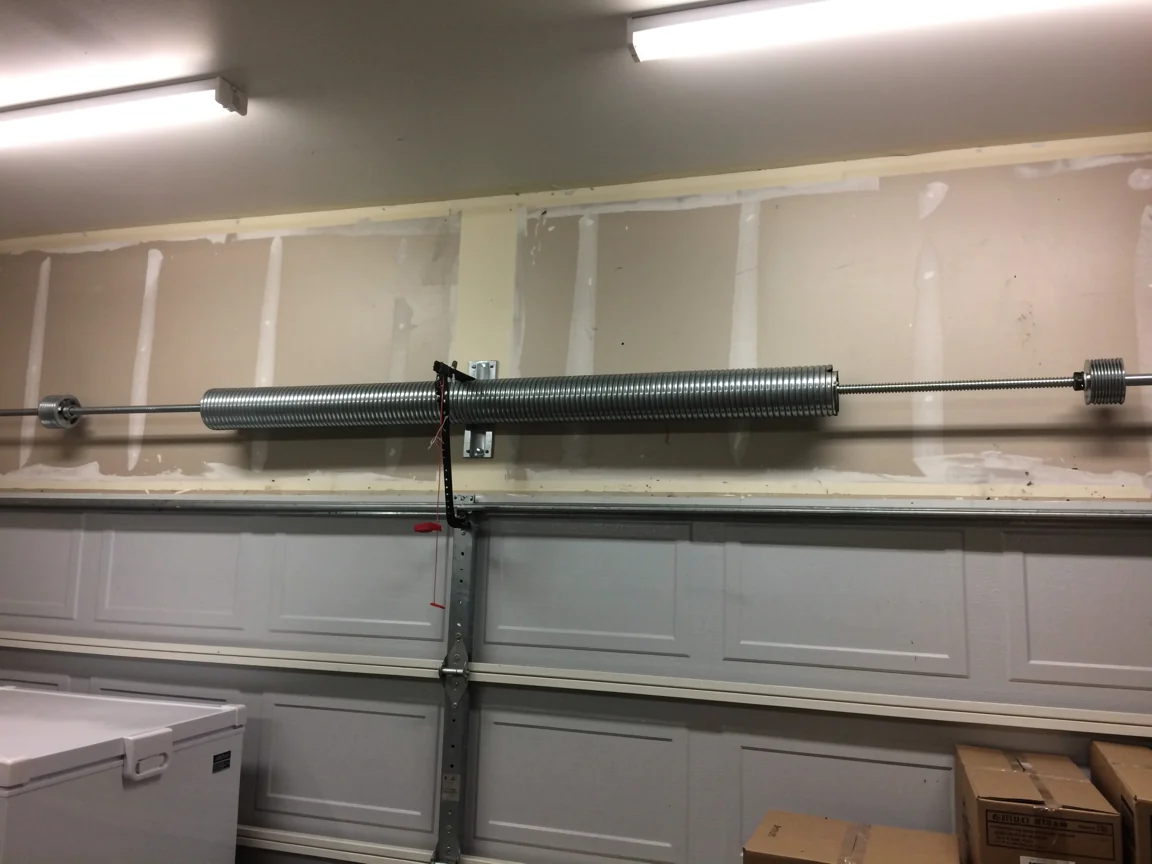
The opener runs but the door won't fully close, and it either reverses halfway up or just sits there blinking a light at you. Or it closes fine most days and then, usually on the coldest morning of the week, it grinds, stalls, or trips the breaker.
Humming without movement
Some of you are hearing a motor that hums but the carriage doesn't move at all - that's a stripped gear, not a dead unit, and it's a different repair. Others have a remote that's stopped talking to the opener even at close range, which in a house wired decades ago is as often a receiver antenna problem as a battery problem.
Early reversal meaning
If your door reverses before it touches the floor, don't keep running it - that's the safety system doing its job, and forcing it through risks the opener's drive mechanism or the door itself.
Symptom notes before calling
Write down what you're actually seeing before you call: does it hum, click, run partway, or do nothing. That one detail usually tells us whether we're bringing a gear kit, a logic board, or a sensor alignment tool, and it cuts the job down from a diagnostic visit to a fix-it visit.
What the Fix Involves
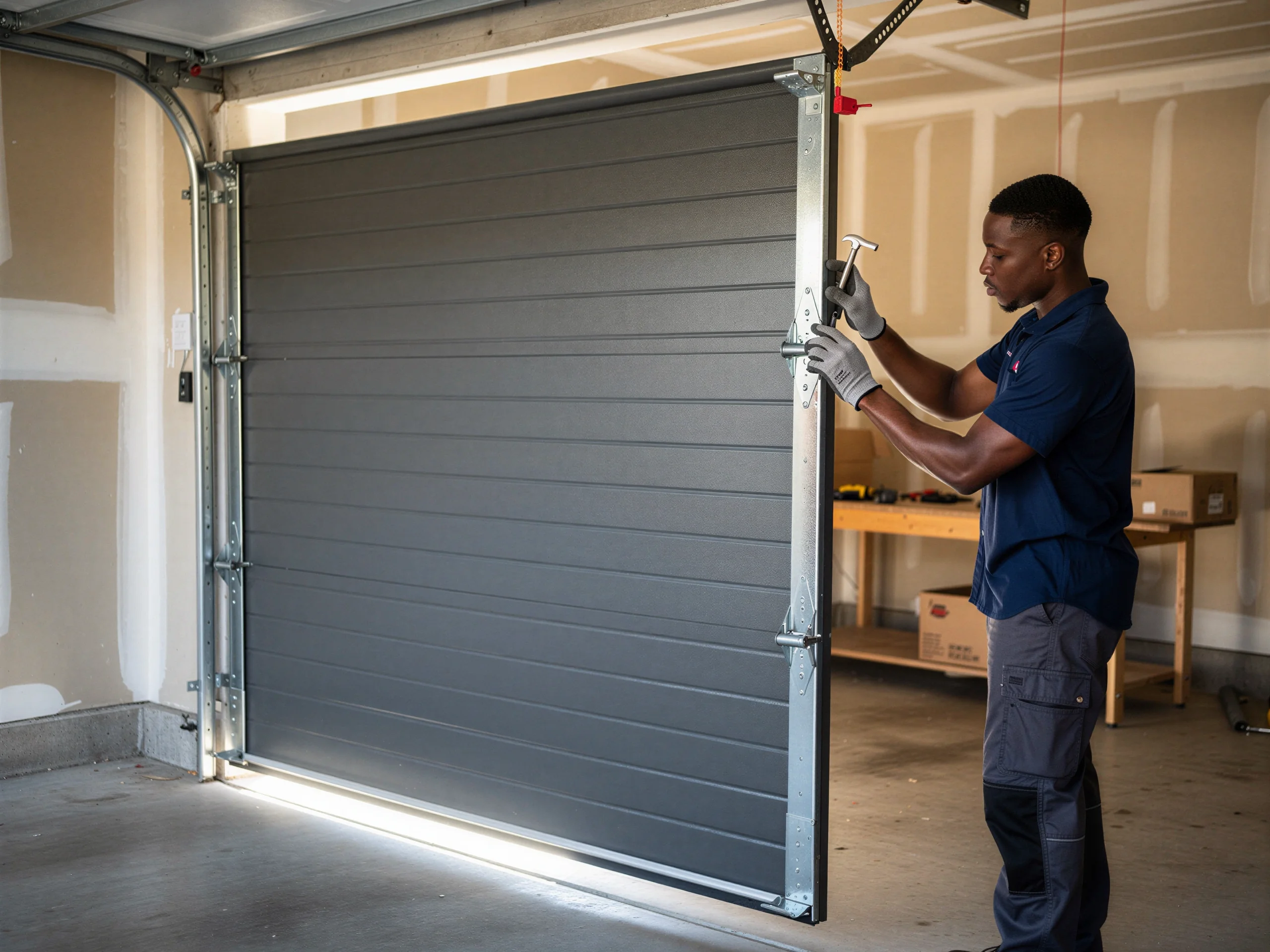
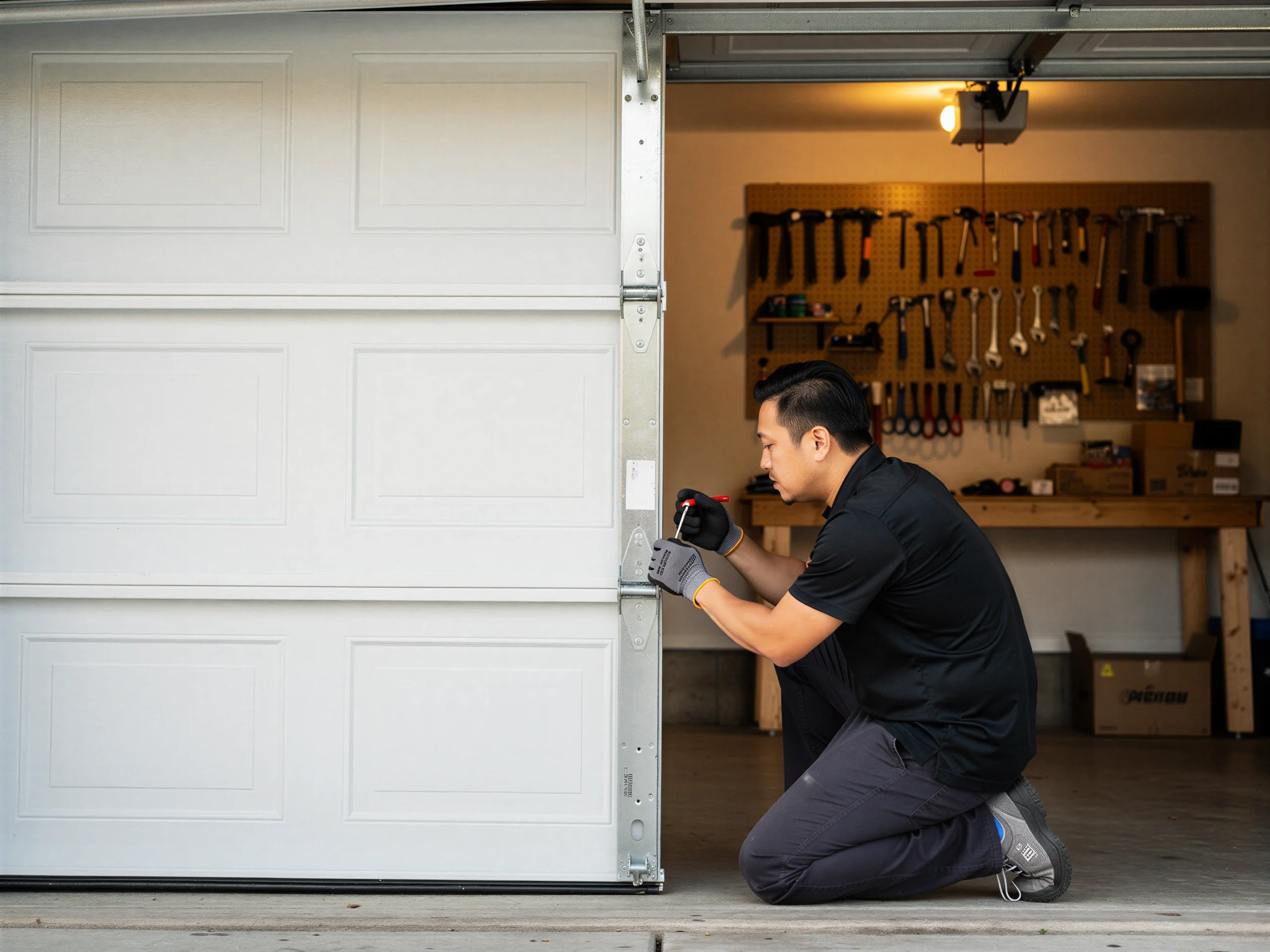
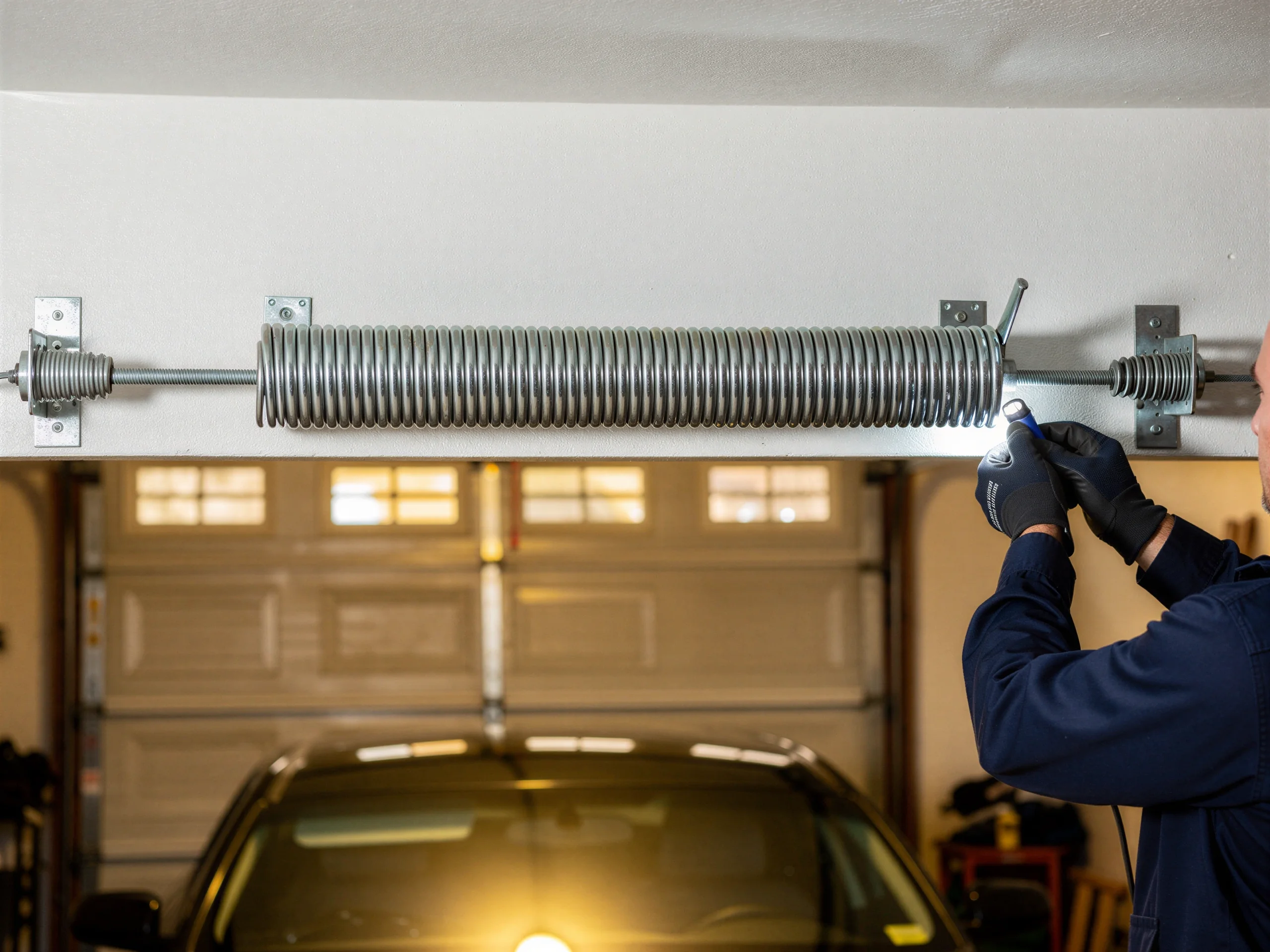
We start at the header bracket, not the opener, because a loose or rotted mount will undo any repair downstream. From there it's a logic board test, a check on the drive gear and belt or chain tension, and a look at both safety sensors for alignment and for corrosion on the contacts - winter road salt gets tracked into garages here and it eats at those low-mounted terminals over years.
Stripped gear replacement math
If the gear's stripped, that's a parts swap, not a rebuild; most of these units from the 80s and 90s don't have a gear kit worth sourcing anymore, and at that point replacing the opener costs less than chasing parts for one nobody makes.
Keeping old units alive
That's the honest limitation: we don't try to keep a dead 25-year-old opener alive just to avoid selling you a new one, and we'll tell you straight when a repair isn't worth the parts cost.
Tracing piecemeal wiring
If it's wiring, we trace it rather than guess, because houses here have been rewired piecemeal often enough that the original diagram, if one ever existed, doesn't match what's actually behind the wall.
What Causes It Around Here
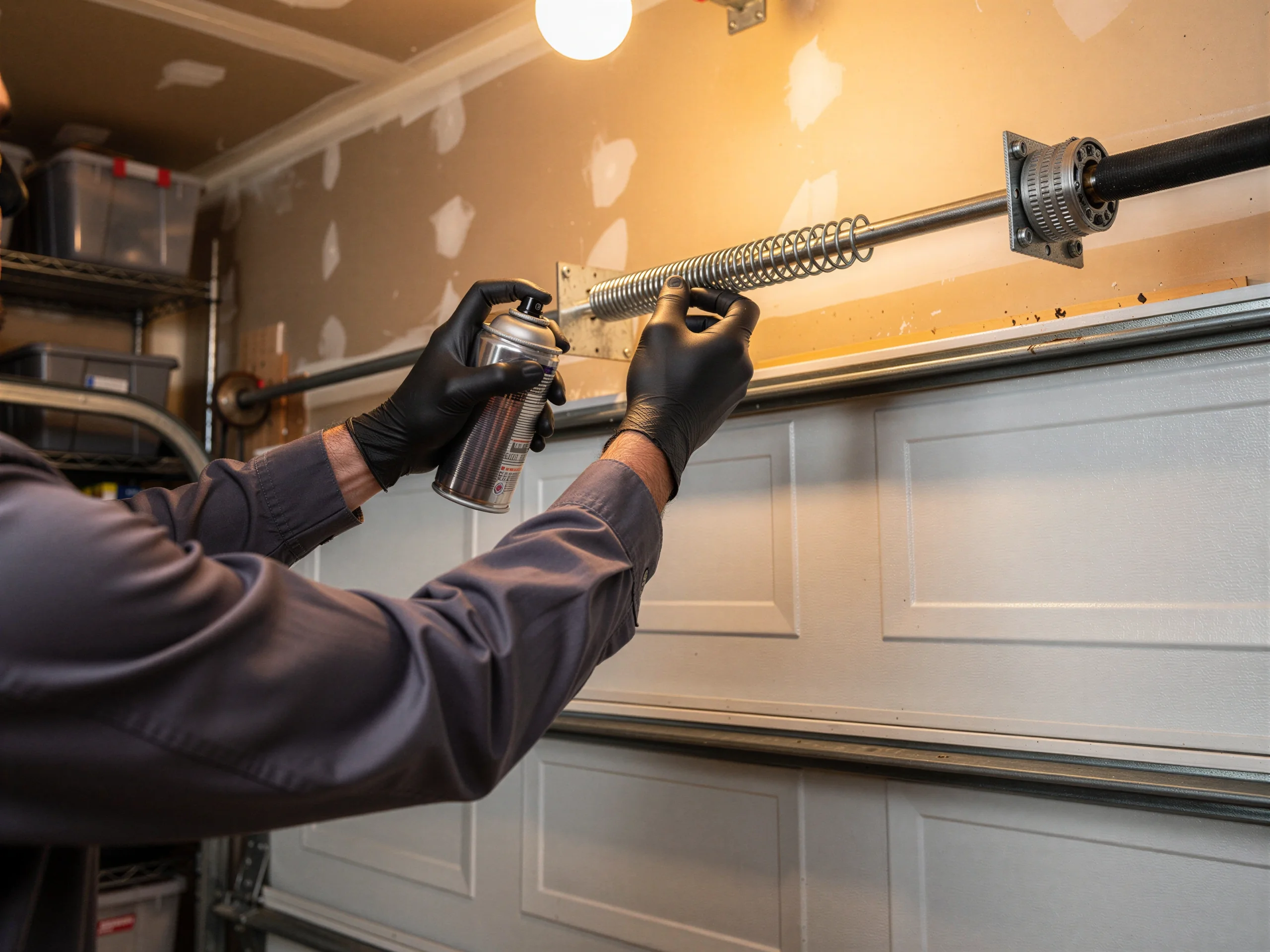
Two things stack on top of each other in this service area and neither one is unique to any single street. First is age: with a median build year of 1957 and most houses dating 1938 to 1990, a large share of garages still have their original header framing, and openers installed on that framing twenty or thirty years ago are reaching the end of gear and board life at roughly the same time across whole blocks. Second is the climate - this is a severe cold band, and an unheated garage swinging from summer heat to deep winter cold puts real stress on lubricant viscosity, belt tension, and the plastic housings around logic boards. That combination shows up the same way whether you're in Royal Oak proper or two miles out in Berkley or Huntington Woods, three miles out in Pleasant Ridge, Madison Heights, or Oak Park, or further out toward Beverly Hills or Bloomfield Hills - the opener age and the cold exposure matter more than which side of a border you're on. Across the roughly 158,601 owner-occupied houses in this broader service area, that's a lot of openers hitting the same wall at the same time.
Talk to a local pro
Garage door service in Royal Oak?
Same-day service with honest, upfront quotes.