Where This Job Goes Sideways
A garage door doesn't fail on a mild Tuesday. It fails on the first morning that hits single digits, because the grease that was fine in October has gone stiff and the spring that was carrying the door fine all summer is now fighting metal that's contracted around it.
Cumulative cycle wear
That's the pattern we see across this part of Michigan, where most houses were built between 1938 and 1990 with a median build year of 1957. A door system that old has usually been re-opened and re-closed tens of thousands of times on hardware nobody's touched since it went in.
Skipped upkeep consequences
Skip maintenance on a newer door in a mild climate and you might get away with it for years. Skip it on a 1950s house in a COLD-severe climate band and the margin disappears. Springs lose tension faster in repeated freeze-thaw cycles, rollers dry out and start binding in the track, and the bottom seal hardens and cracks, letting cold air push straight at the hardware above it.
Gradual imbalance buildup
None of that shows up as a sudden break most of the time. It shows up as a door that's slower, louder, and a little more off-balance each month until one day it isn't balanced at all.
What You Are Seeing
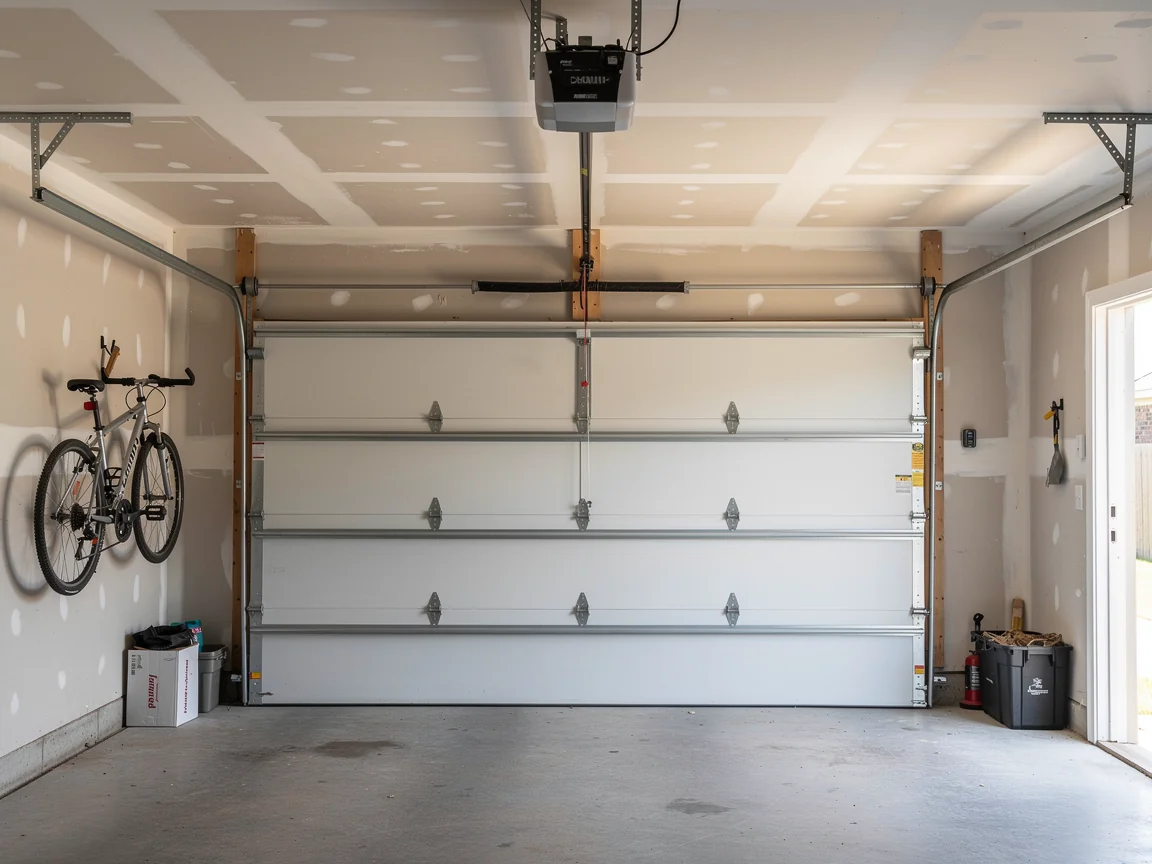
The early signs are easy to write off. The door hesitates for a half-second before it starts moving. It makes a grinding or scraping sound partway through the cycle instead of running smooth top to bottom.
Uneven travel speed
One side looks like it's traveling faster than the other, which usually means uneven spring tension, not a dying opener. The remote still works, so people assume everything's fine. Later signs are harder to ignore: a door that won't stay up without the opener holding it, a cable that's started to fray at the drum, or a bottom panel that's picked up a dent because the door dropped instead of lowering.
Sounds treated as normal
Owners in houses from this pre-1960 building period often tell us the door "has always sounded like that," which is sometimes true and sometimes a torsion spring on its last winter. We can't tell which from a phone description.
Phone diagnosis limits
That's the honest limit of a remote diagnosis - a technician has to put a hand on the hardware and watch a full cycle to know if you're looking at routine wear or a part close to letting go.
What the Fix Involves
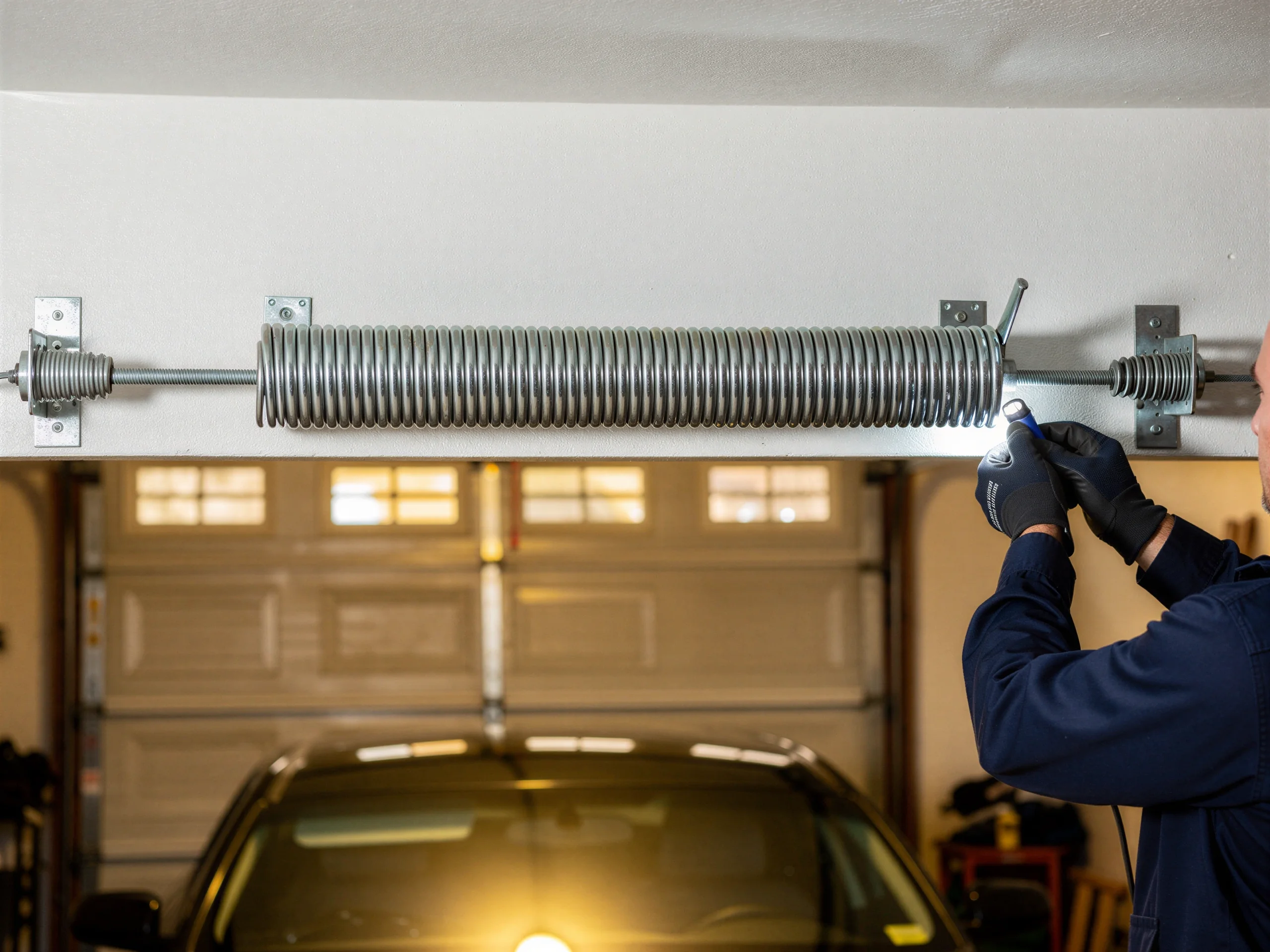
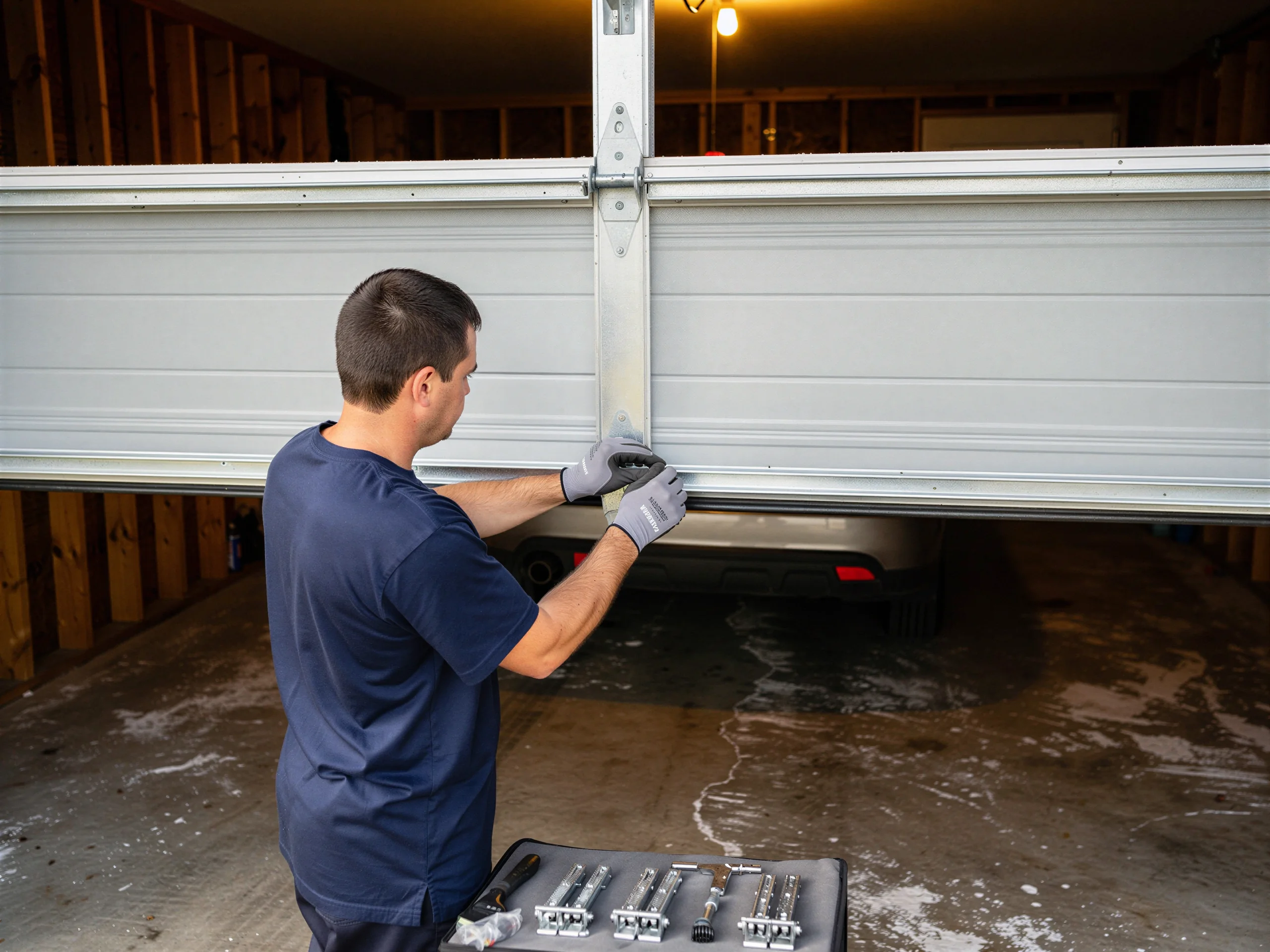
A real maintenance visit isn't a squirt of WD-40 and a wave goodbye. It starts with checking spring tension against the door's actual weight, because springs sized for an old wood door don't match a heavier insulated replacement panel someone bolted on later.
Roller and hinge cleanup
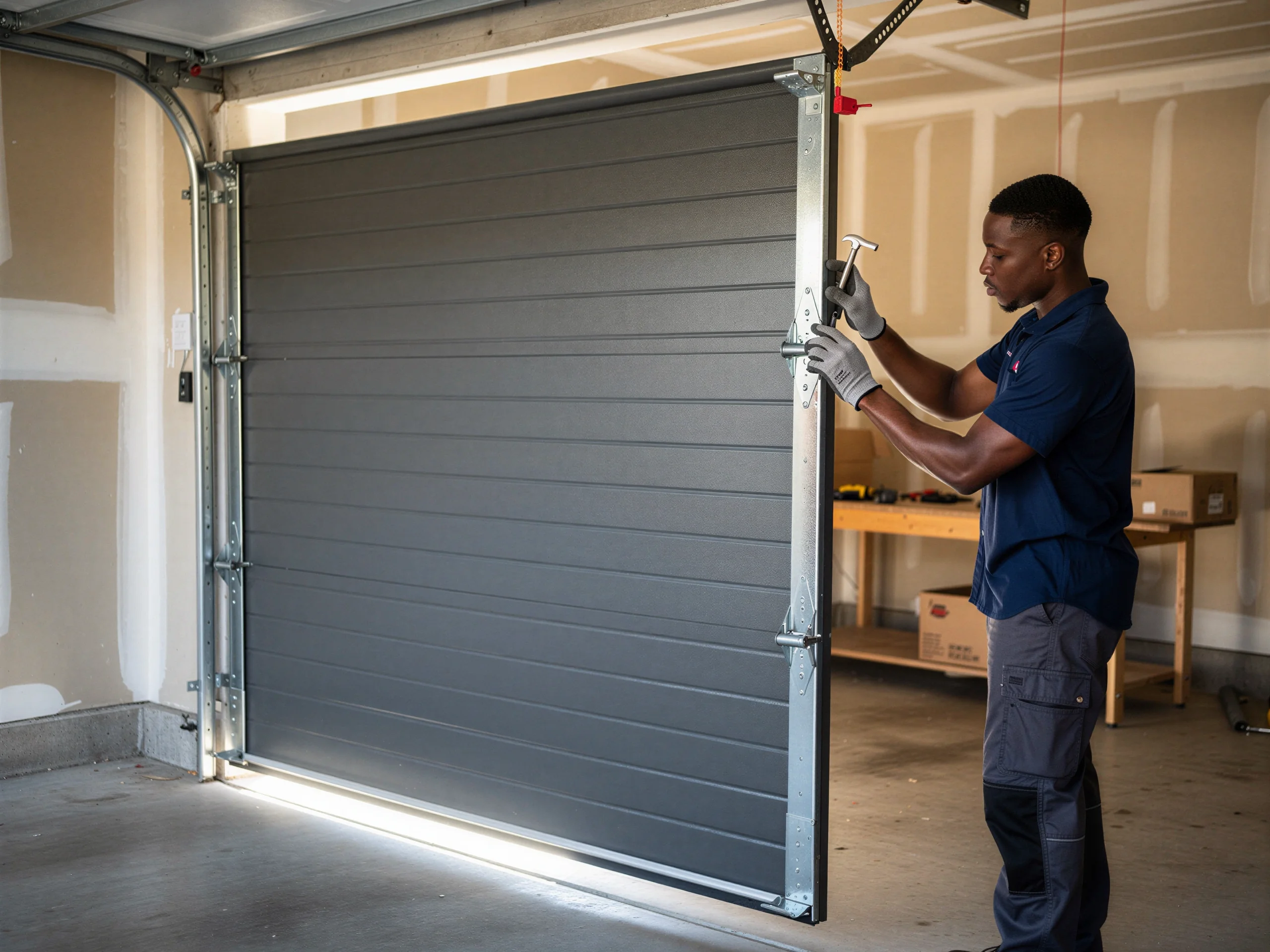
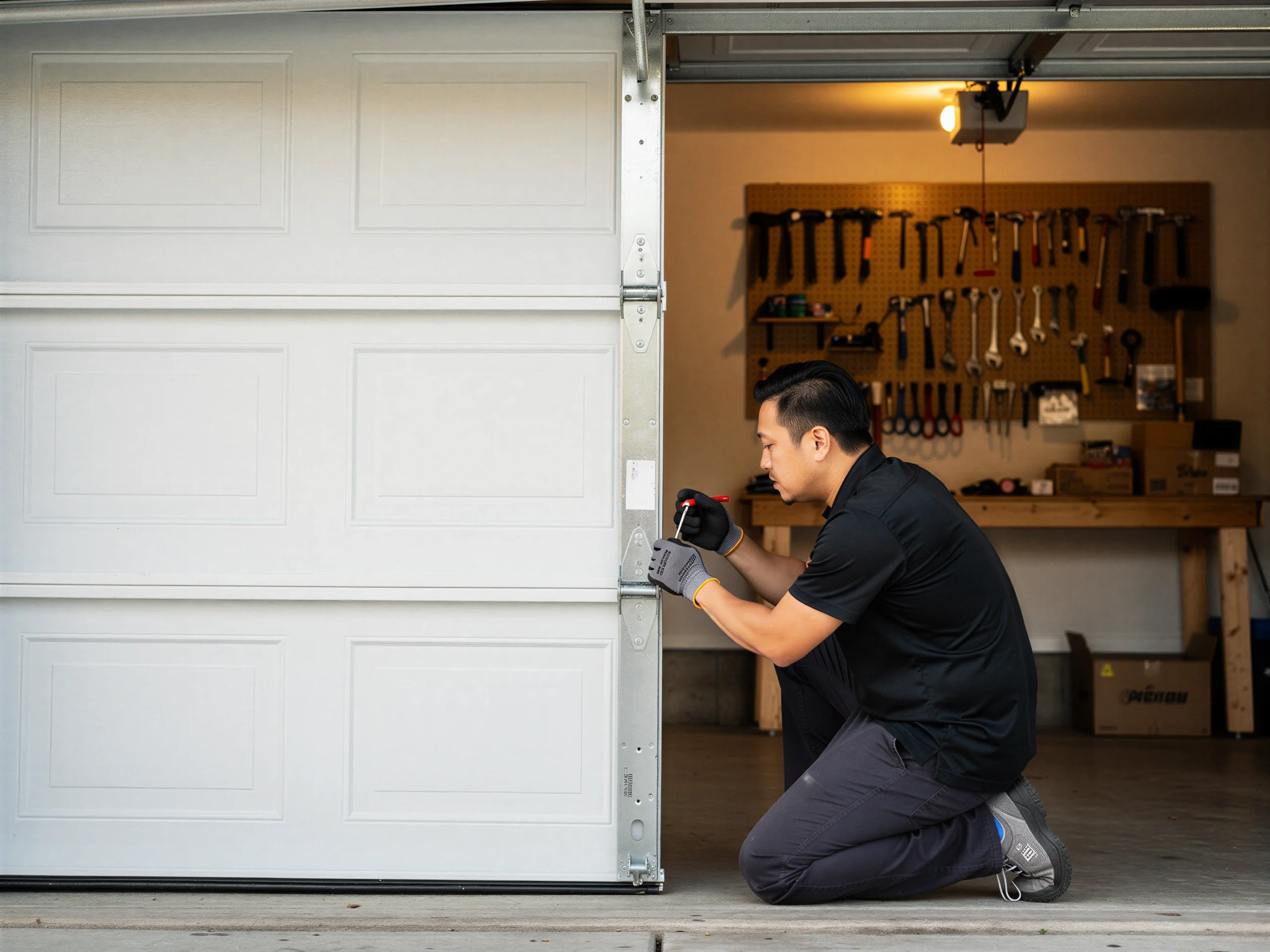
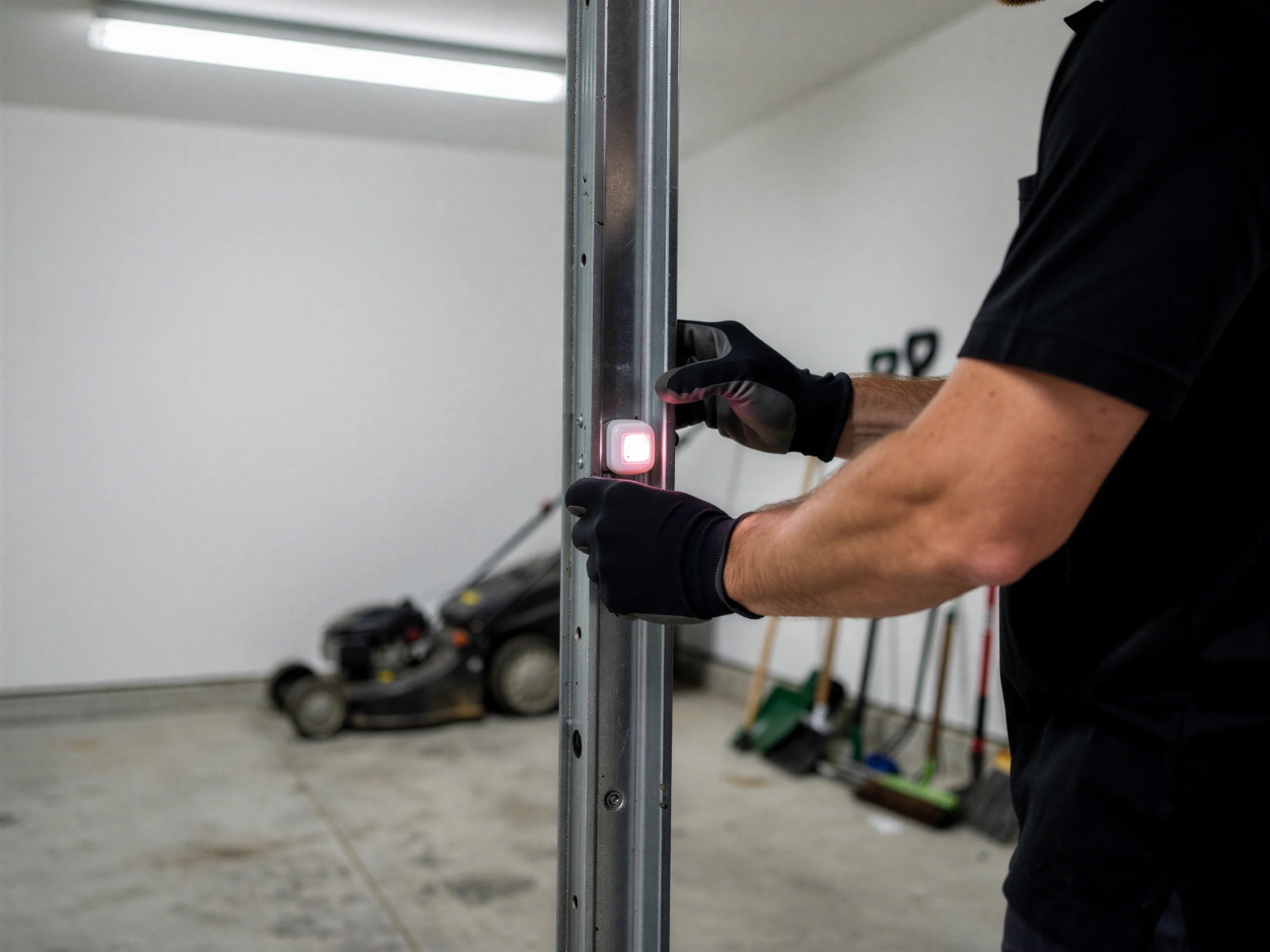
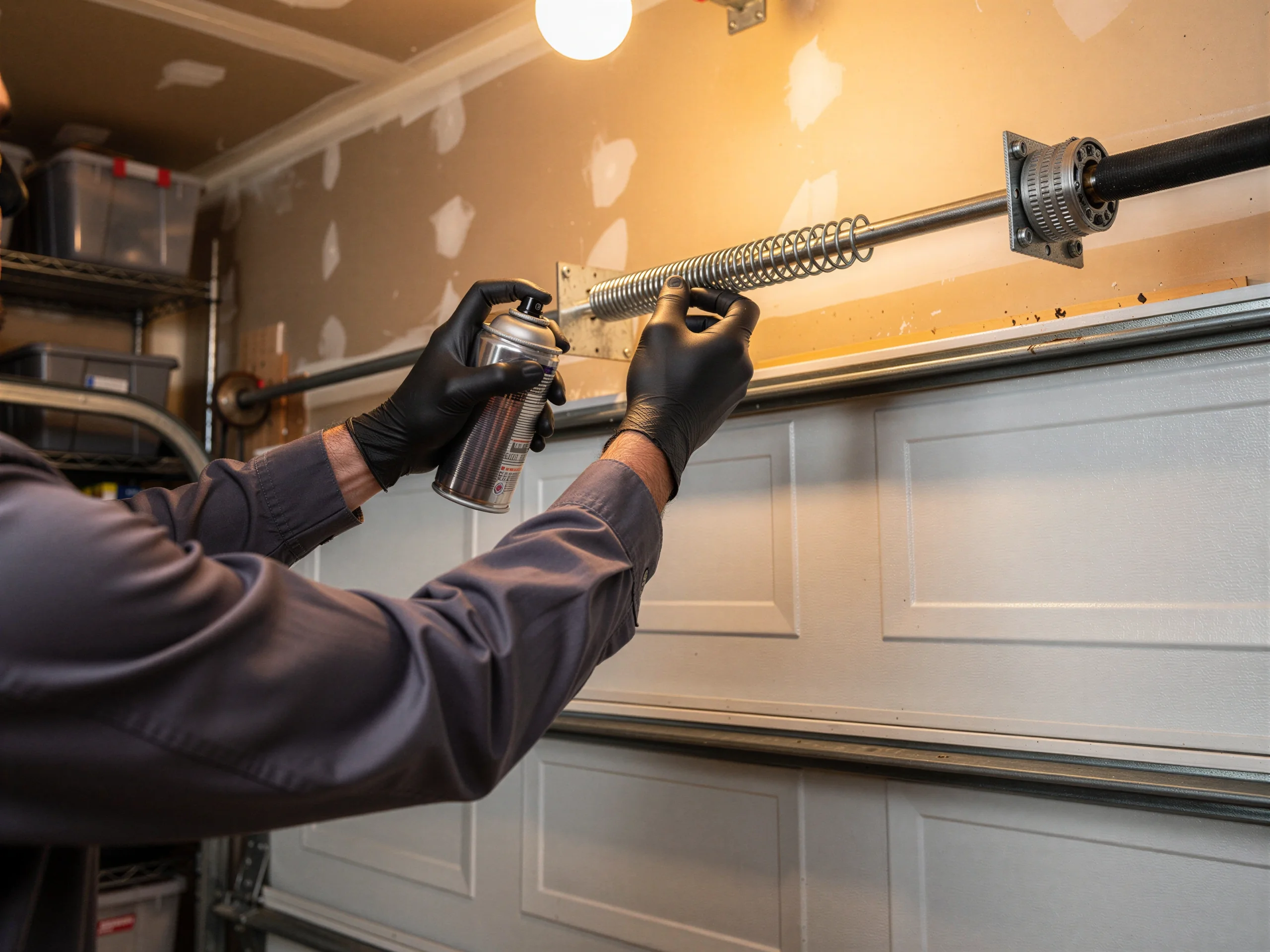
From there it's rollers and hinges - cleaning out old grease, checking for wear grooves, lubricating with the right product rather than anything in the garage. Track alignment gets checked next, since a track that's drifted even an eighth of an inch causes the grinding most owners hear but can't place.
Cable and seal inspection
Cables and the bottom seal get inspected for cracking or fraying, and the opener's force settings get tested so the door doesn't slam down on something that walks under it. One thing we won't do is replace parts that don't need it to pad the ticket - if your torsion spring still has life left, we tell you that and move on.
Sourcing legacy parts
We also won't pretend every part on a house this old is still in production; original hardware from the 1938-1990 era sometimes means a longer wait on a specific replacement piece, and we say so up front rather than after the fact.
What Causes It Around Here
This isn't a generic wear-and-tear story. It's specific to the housing stock. Across the 45 named communities this shop covers - Royal Oak included, along with close neighbors like Berkley, Huntington Woods, and Pleasant Ridge - the majority of homes predate 1960, and the hardware installed with those original garages is frequently still in the wall. That means original torsion springs, original track brackets, and opener units from decades before today's safety-sensor standards.
Layer a COLD-severe climate on top of that age and you get compounding failure: metal fatigue from decades of use, plus seasonal contraction that stresses already-worn parts twice a year. Across the service area's 288,119 households, 158,601 are owner-occupied houses, which means most of this hardware belongs to someone who's lived with the same door for years and has no real baseline for what "normal" sounds like. At a median household income of $70,185, most of those owners are also the kind of customer who'd rather pay for a maintenance visit now than a full system replacement later - which is exactly the math that makes regular maintenance worth doing on a house this old.
Talk to a local pro
Garage door service in Royal Oak?
Same-day service with honest, upfront quotes.