Where This Job Goes Sideways
A panel job looks simple until you try to order the part. Royal Oak's housing mostly went up between 1938 and 1990, with a median build year around 1957, and a lot of those garages still carry the original door or a direct replacement from decades back.
Panel fit mismatch
The panel dimensions, the groove profile, the hinge spacing - none of it matches what's on the shelf at a big box store today. So the sideways part isn't the dent. It's finding a panel that bolts to the door you actually have.
Salvage or custom panels
On a door from the 1950s or 60s, we're often looking at a custom cut, a near-match from a salvage supplier, or a decision to replace the whole section instead of chasing one panel.
Longer sourcing timelines
That takes longer than homeowners expect, and we tell people that up front rather than quoting a same-day fix we can't deliver. If the door is a steel sectional from the last fifteen years, this is a much faster job - stock panels fit, and we can usually turn it around quick.
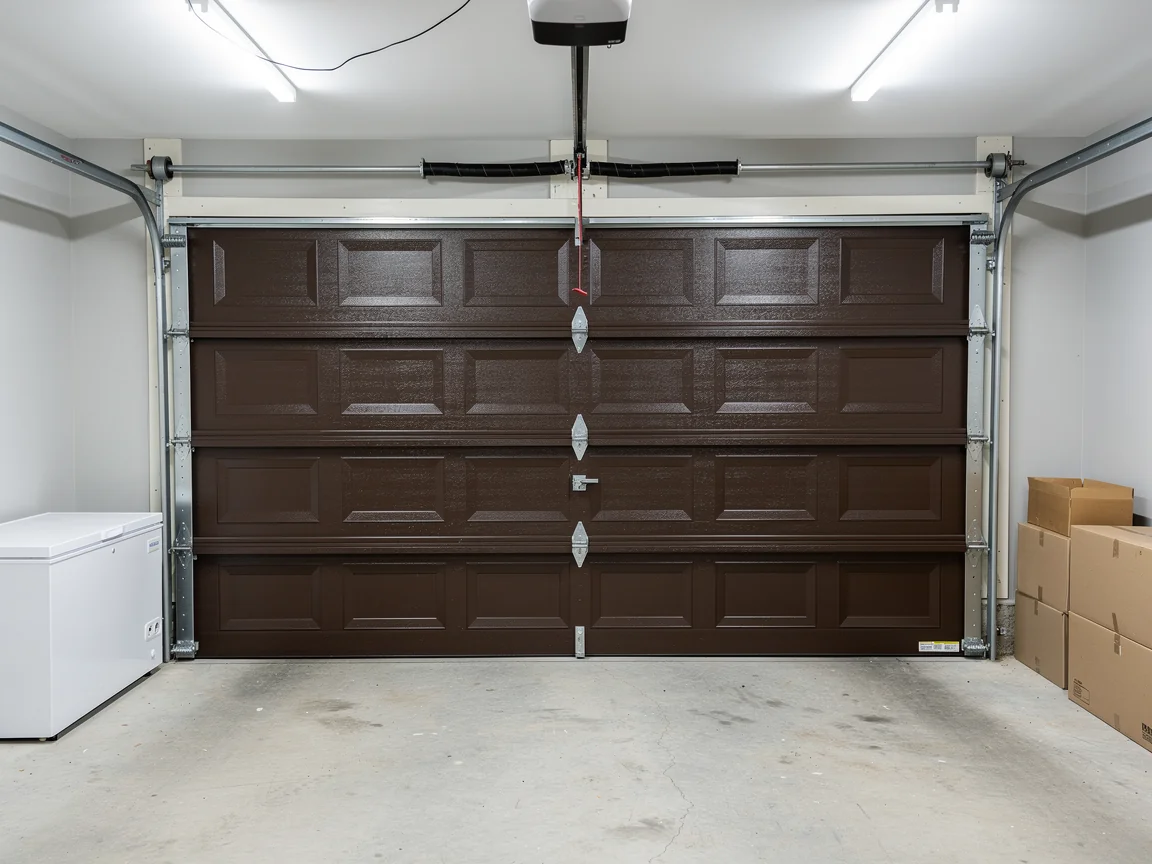
What You Are Seeing
Most calls start with a visible dent from a car bumper, a trash can, or a kid's bike - a crease across one section that doesn't pop back out.
Bottom-panel rot on wood
On older wood doors common in this area's pre-1960 housing, you're more likely seeing rot or splitting along the bottom panel, where decades of snowmelt and runoff have soaked into the grain.
Steel fold-line cracking
On steel doors, cold-weather cracking shows up differently: a seam that's split along a fold line, or a panel that's buckled inward after an impact because the metal lost flexibility in freezing temperatures. Michigan's cold winters make steel more brittle in January than July, so a hit that would just dent the door in August can crack it outright in a hard freeze.
Imbalance from one panel
Either way, once one panel fails structurally, it throws off the balance of the whole door and puts extra load on the opener and the tracks next to it. That's the part people miss - they see the cosmetic damage and don't realize the door is now running crooked.
What the Fix Involves
First we identify the door - manufacturer, model if it's legible, panel height and section count. On newer doors this takes minutes. On an original or early-replacement door from Royal Oak's older housing stock, we may need to measure the exact panel and source a match rather than a stock part, which can mean a short lead time before the part's in hand.
Panel swap steps
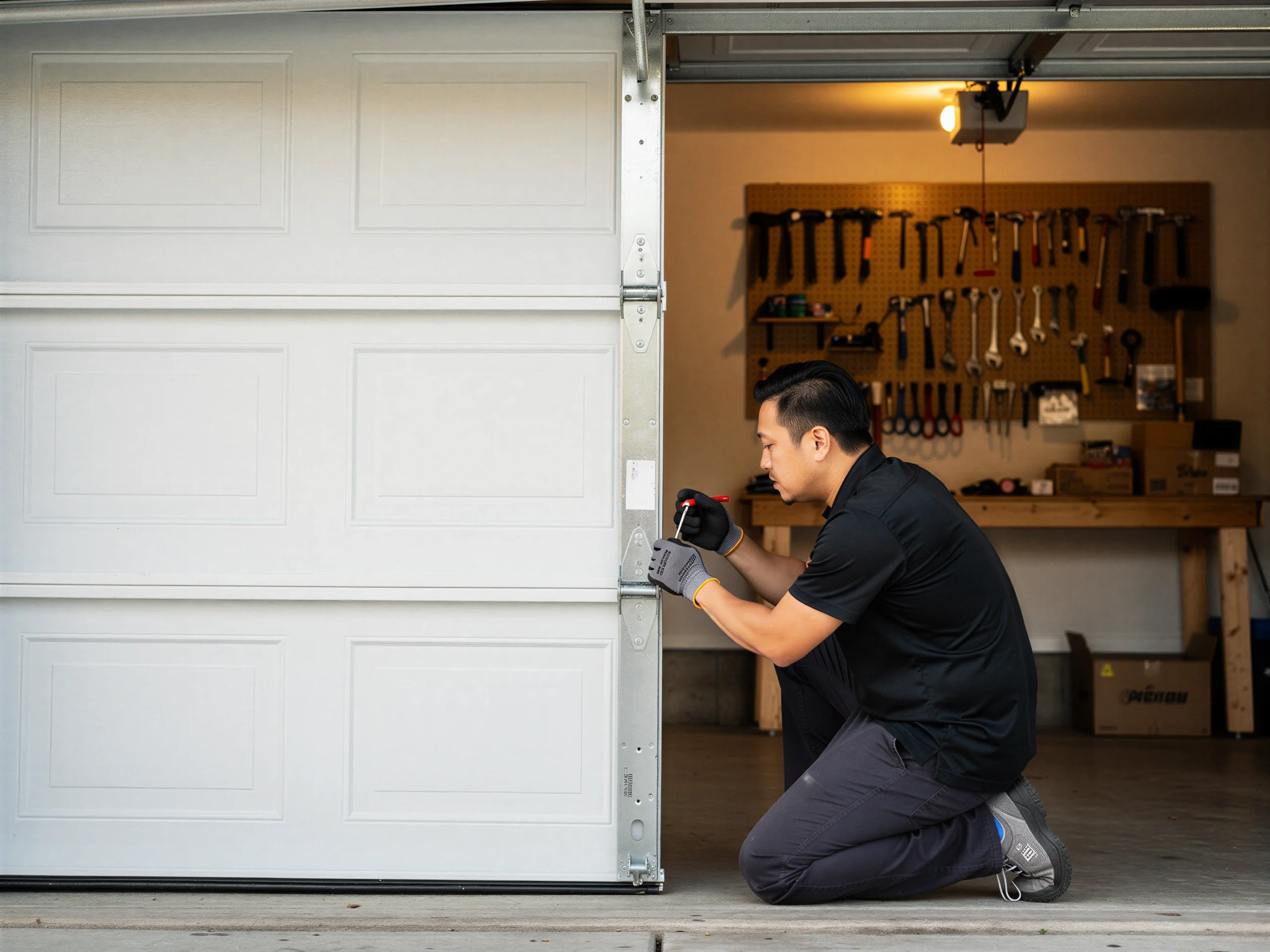
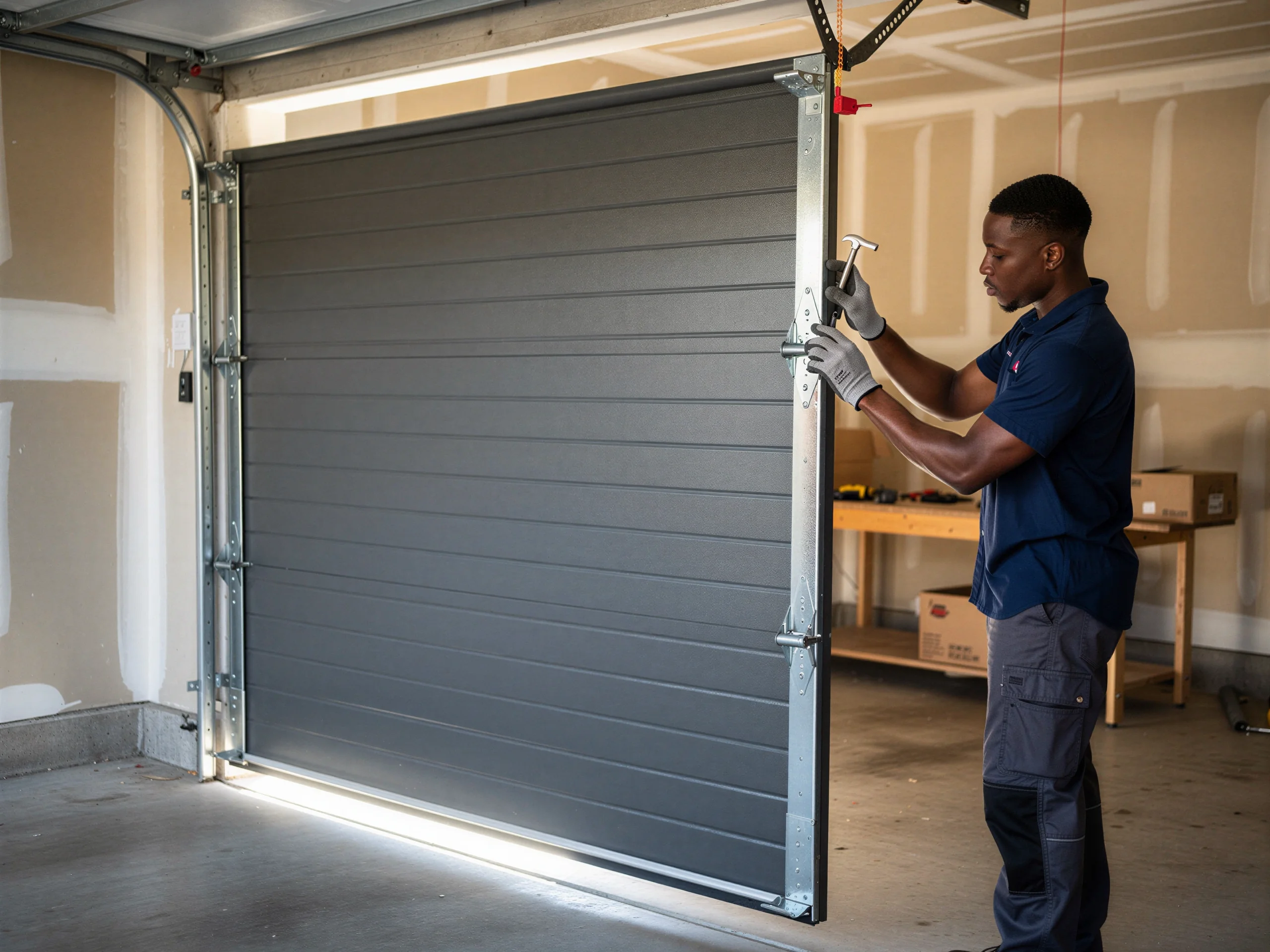
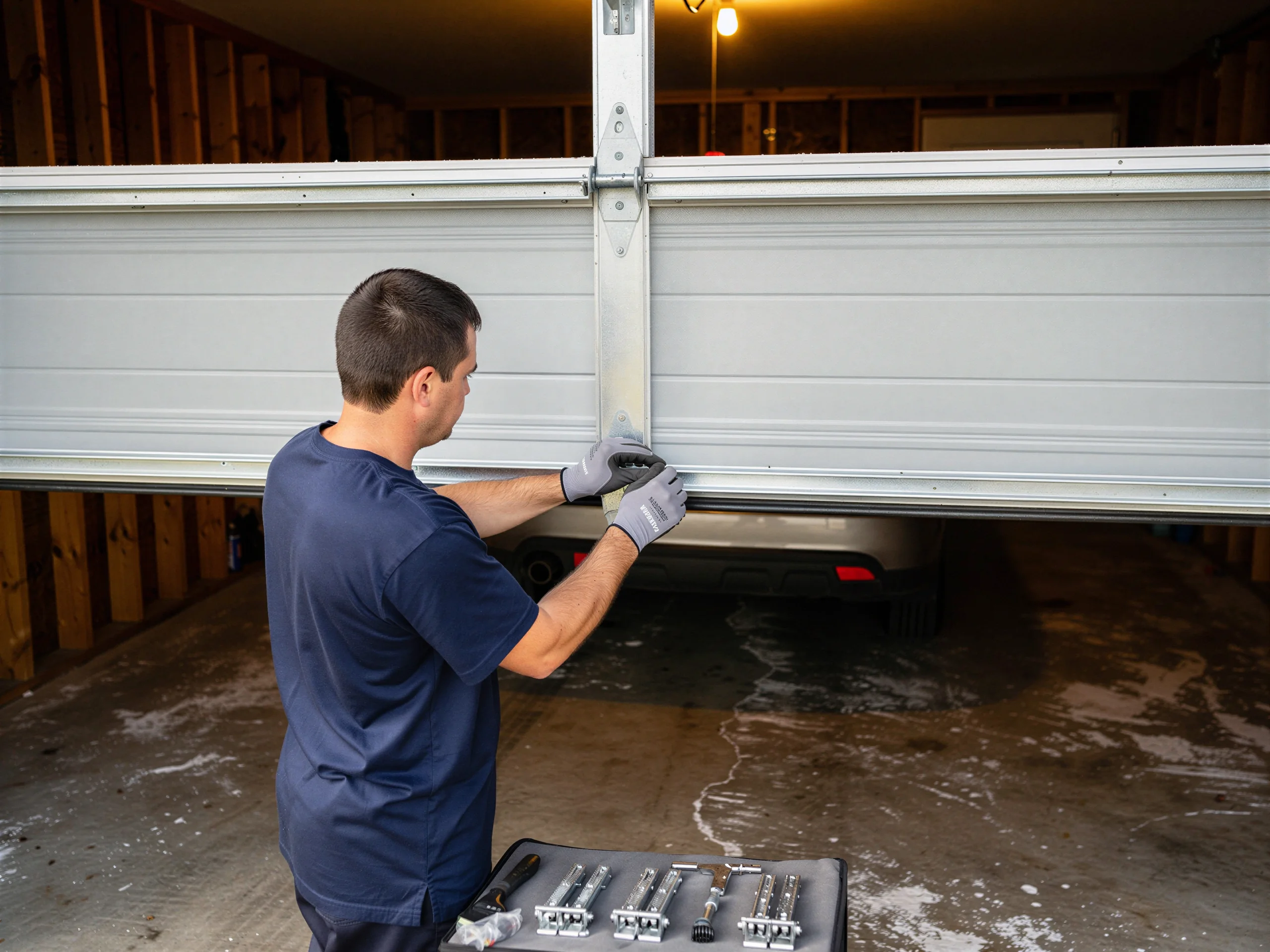
Once the panel's on site, the job itself is straightforward: disconnect the opener, support the door, pull the fasteners and end hinges off the damaged section, swap in the new panel, and re-hinge it to the sections above and below.
Post-swap alignment checks
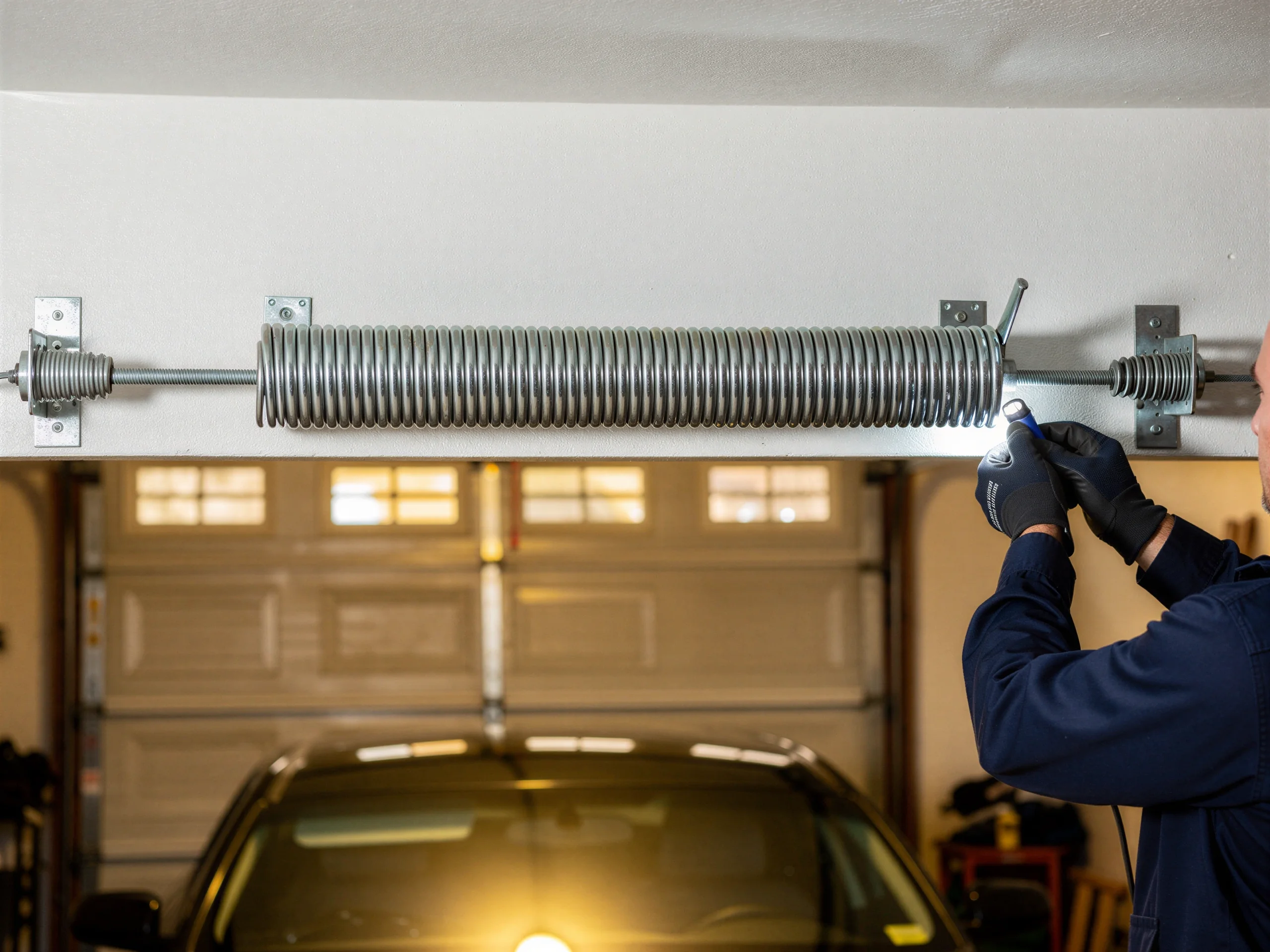
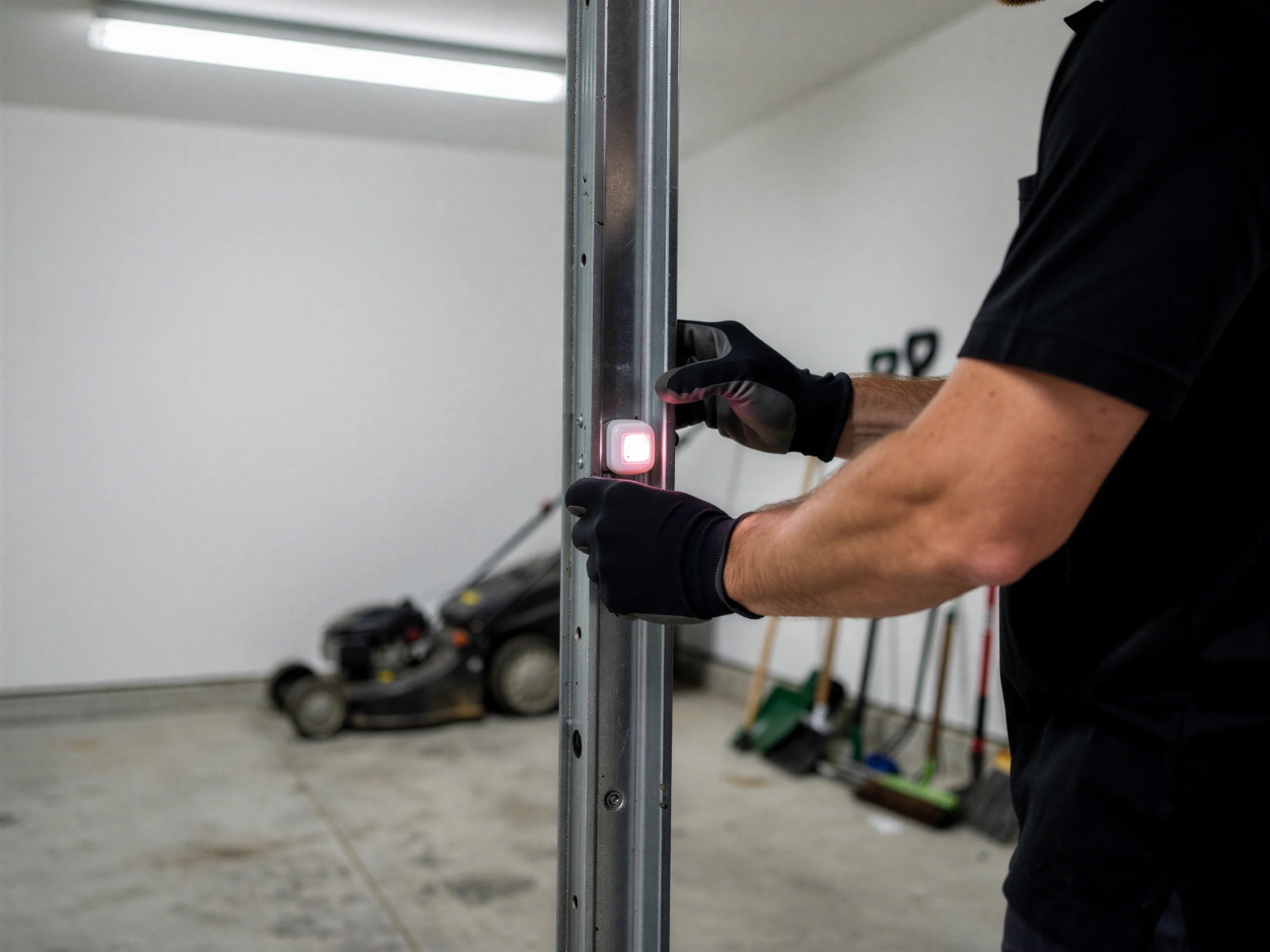
We check the track alignment and cable tension afterward, since a bowed or cracked panel often throws the door slightly out of square even before you touch it.
When whole door wins
One honest limitation: if the damaged section is on a door that's otherwise failing - rusted tracks, a dead opener, multiple cracked panels - a single panel swap isn't worth the labor. We'll tell you when replacing the whole door is the cheaper path over the next few years instead of patching one piece of an aging one.
What Causes It Around Here
Three things line up in this area and make panel damage common: the age of the housing, the age of the doors still in service, and the weather. With most homes built between 1938 and 1990 and a big share of that stock pre-1960, a lot of garages are on their second or third opener but still running close to the original door, or a mid-century steel replacement that's now itself 30-plus years old.
The cold is the other half of it. A severe cold climate means steel panels spend a good chunk of the year stiff and brittle, wood panels swell and shrink with freeze-thaw cycles, and any existing stress crack from an old impact tends to widen rather than heal. Combine that with daily use - cars backing in close, kids and bikes in tight driveways typical of this kind of older housing - and panel damage shows up as a recurring call across the area rather than a one-off. It's less about bad luck on any single door and more about decades-old steel and wood meeting a winter that doesn't let up.
Talk to a local pro
Garage door service in Royal Oak?
Same-day service with honest, upfront quotes.