
Unmatchable panel damage
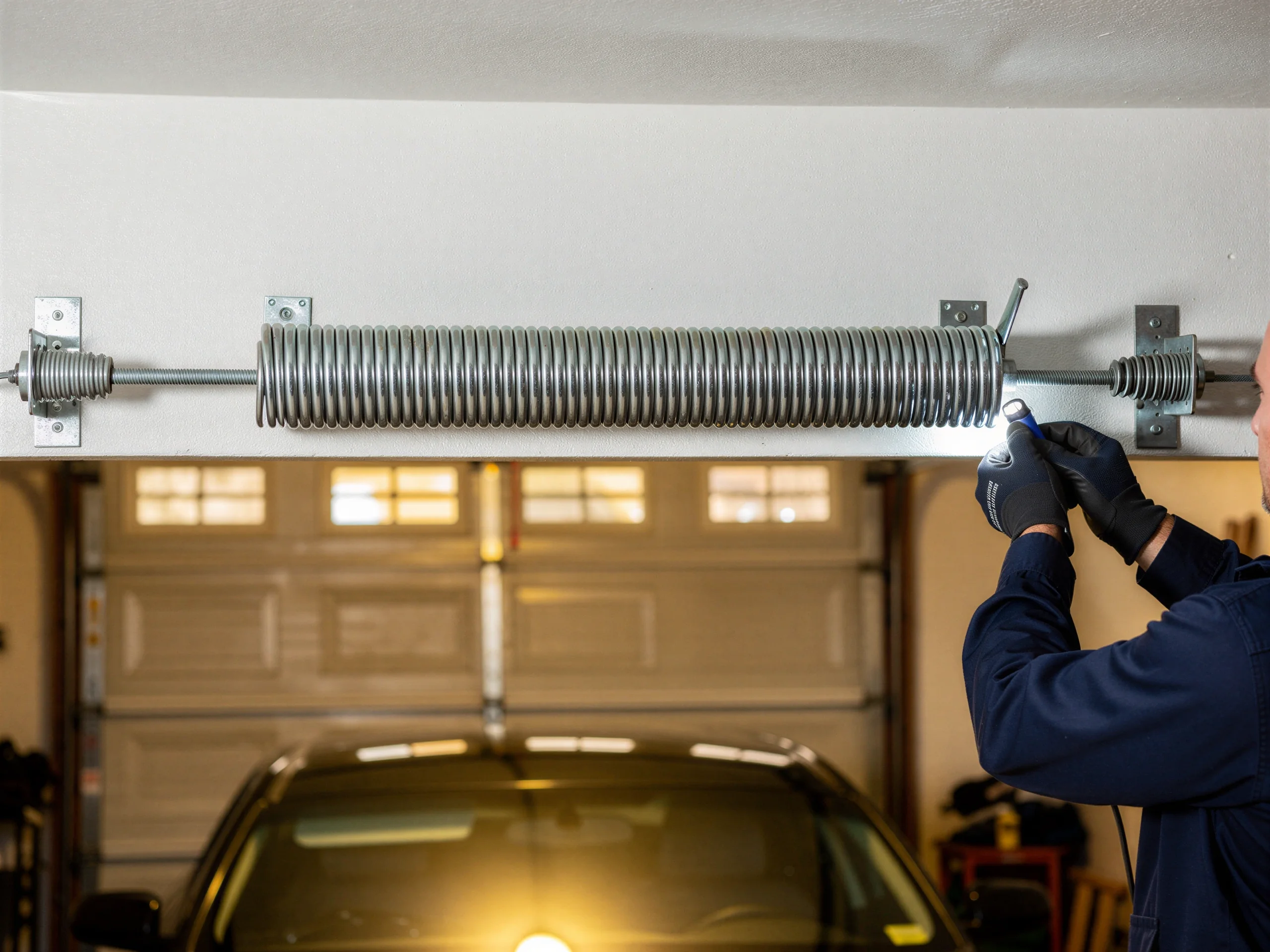
Panel repair comes up too - on a door this old, a single damaged panel often can't be color- or profile-matched, so the honest fix is sometimes a full door rather than a patch.
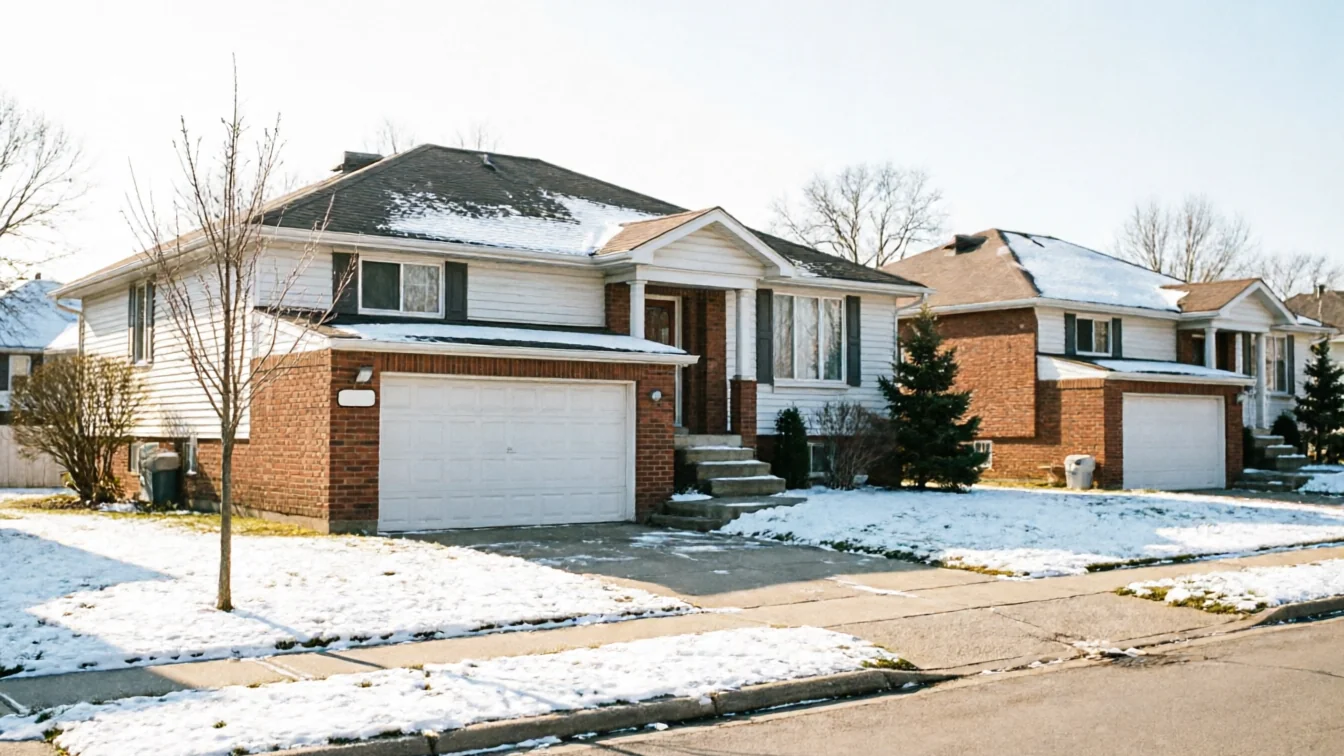
Pleasant Ridge, Royal Oak MI
Pleasant Ridge homes date to a 1938 median build year, older than the surrounding area. We travel 3 miles from Royal Oak for spring, opener, and panel repair here.
What we do here
Local housing
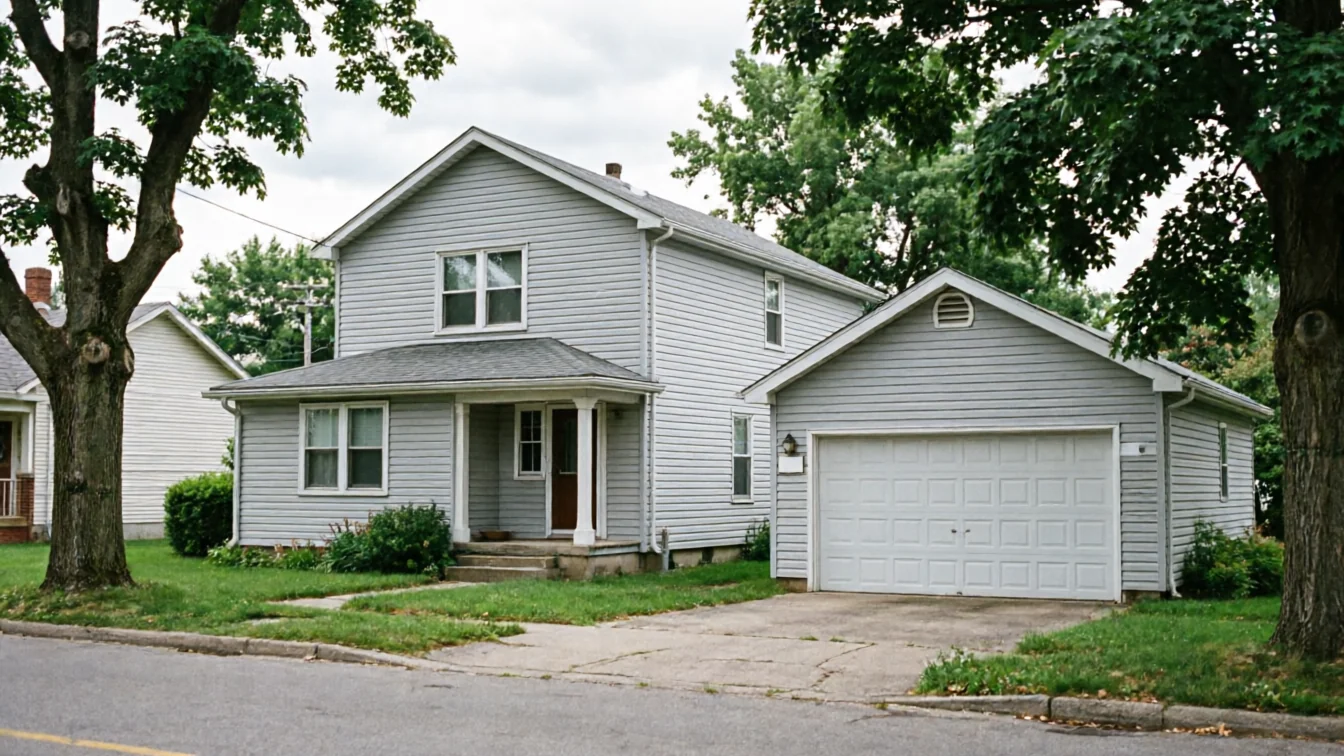
Pleasant Ridge's housing stock skews older than most of the towns around it. The median build year here is 1938, which puts a big share of these garages a full generation ahead of the 1957 median you'd find across the wider service area. That's not a small gap. A door and track system installed in the late 1930s or 1940s was built for a different kind of hardware than what shops carry today, and a lot of these original setups have been patched, not replaced, over the decades.
With only about 1,173 households in Pleasant Ridge, this is a small, tight footprint - a few square miles where the garages tend to share the same age and the same quirks. It's also a town with a median household income of $161,058, well above the $70,185 median for the broader area, and that shows up in the kind of repair calls we get: owners here tend to fix things properly the first time rather than patch around a problem.
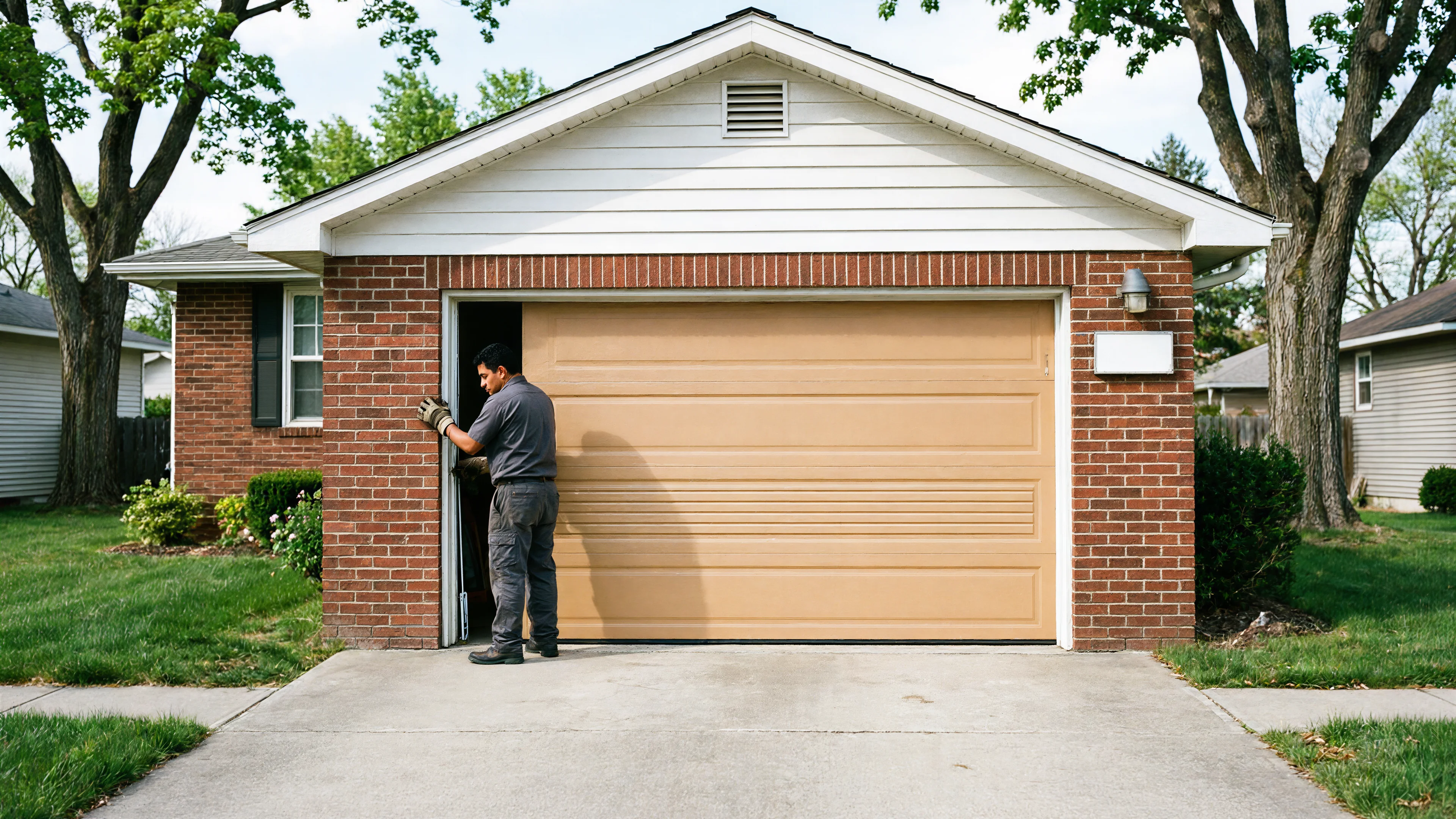
We come in from Royal Oak, about 3 miles away, so getting to a Pleasant Ridge garage isn't a long haul for us - just a short, familiar run up through streets lined with homes from that same prewar build era.
Door impact
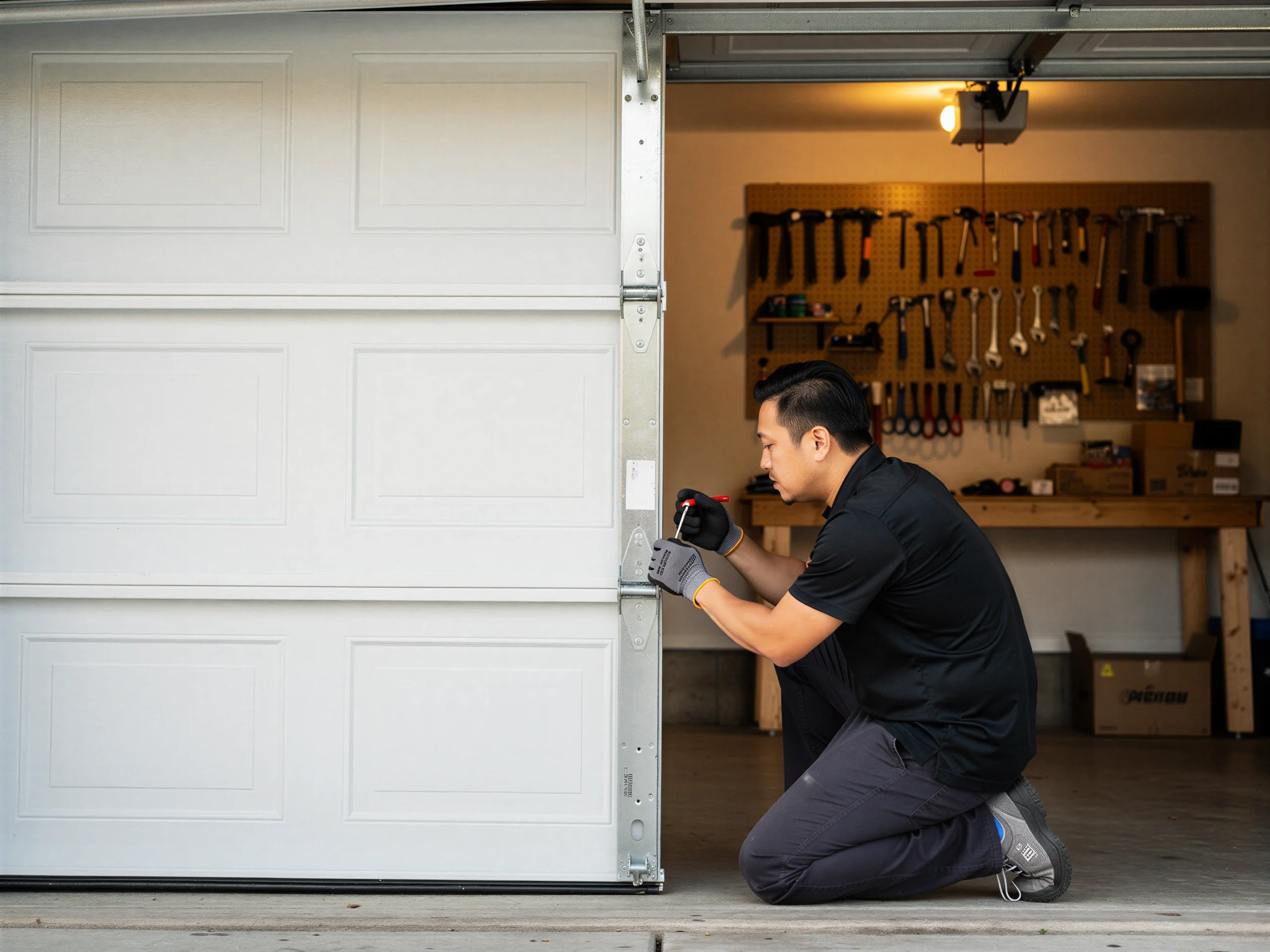
A garage built around 1938 almost never has the torsion spring setup you'd find on a house built in the 1970s or later. A lot of these are narrower single-car bays with low headroom, which rules out some of the newer opener models outright and limits track configuration options. If your garage has never been touched since the original construction, there's a decent chance the door itself is a replacement from some later decade, but the framing and track mounts are original - which means non-standard spacing that a stock part doesn't always fit.
The region sits in a severe cold climate band, and on a door this old, the weather stripping and seals have usually failed long before anyone notices a functional problem. Cold makes old steel brittle and old springs lose tension faster, so the failure mode on a 1938-era door tends to show up as a sudden snap rather than a slow decline.
We'll say plainly: if your opener or track hardware predates a certain era, we may not have a drop-in replacement part on the truck, and ordering one can take longer than a same-week repair on newer equipment. That's the honest trade-off of owning a garage this old.
Common jobs
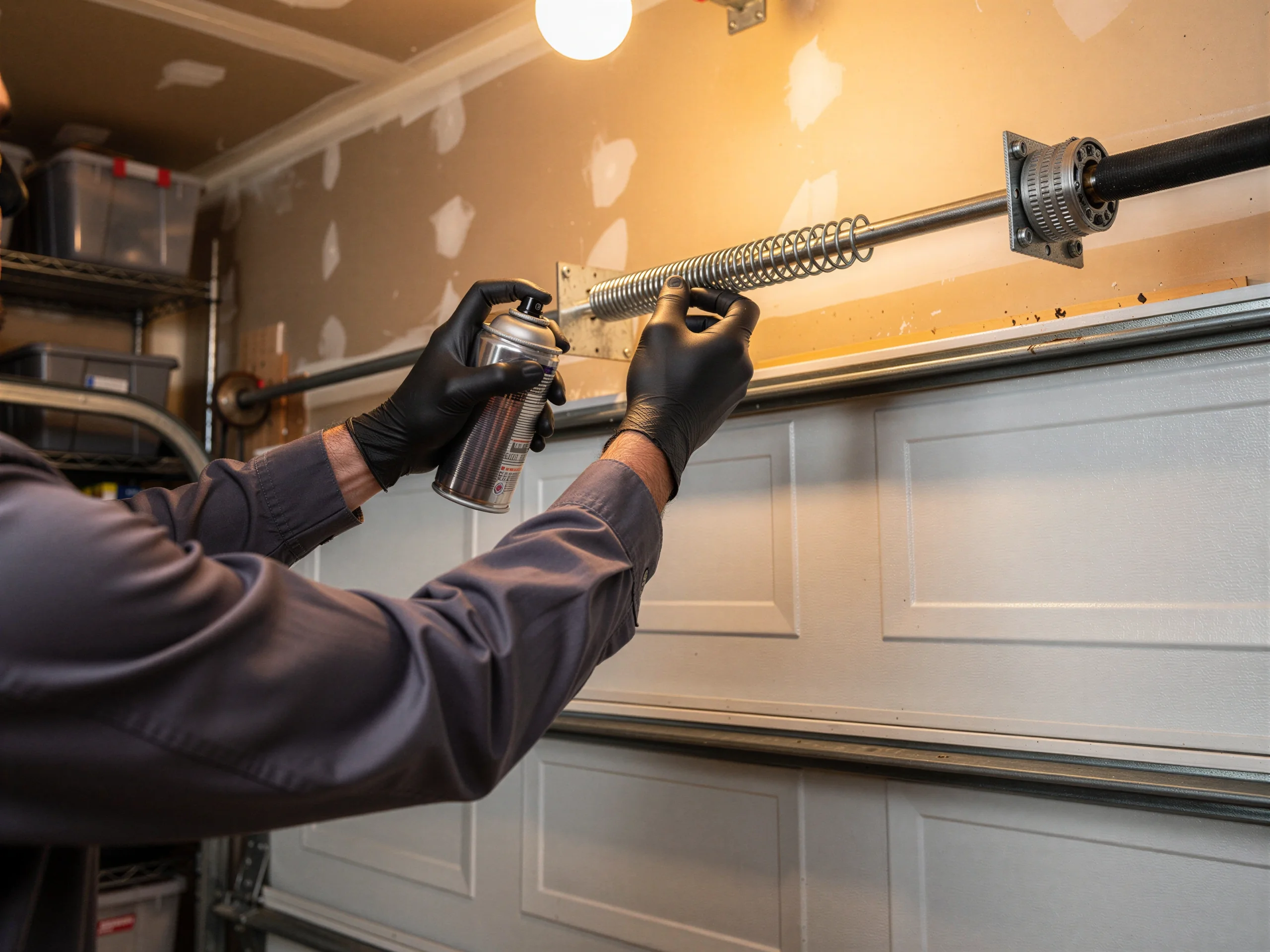
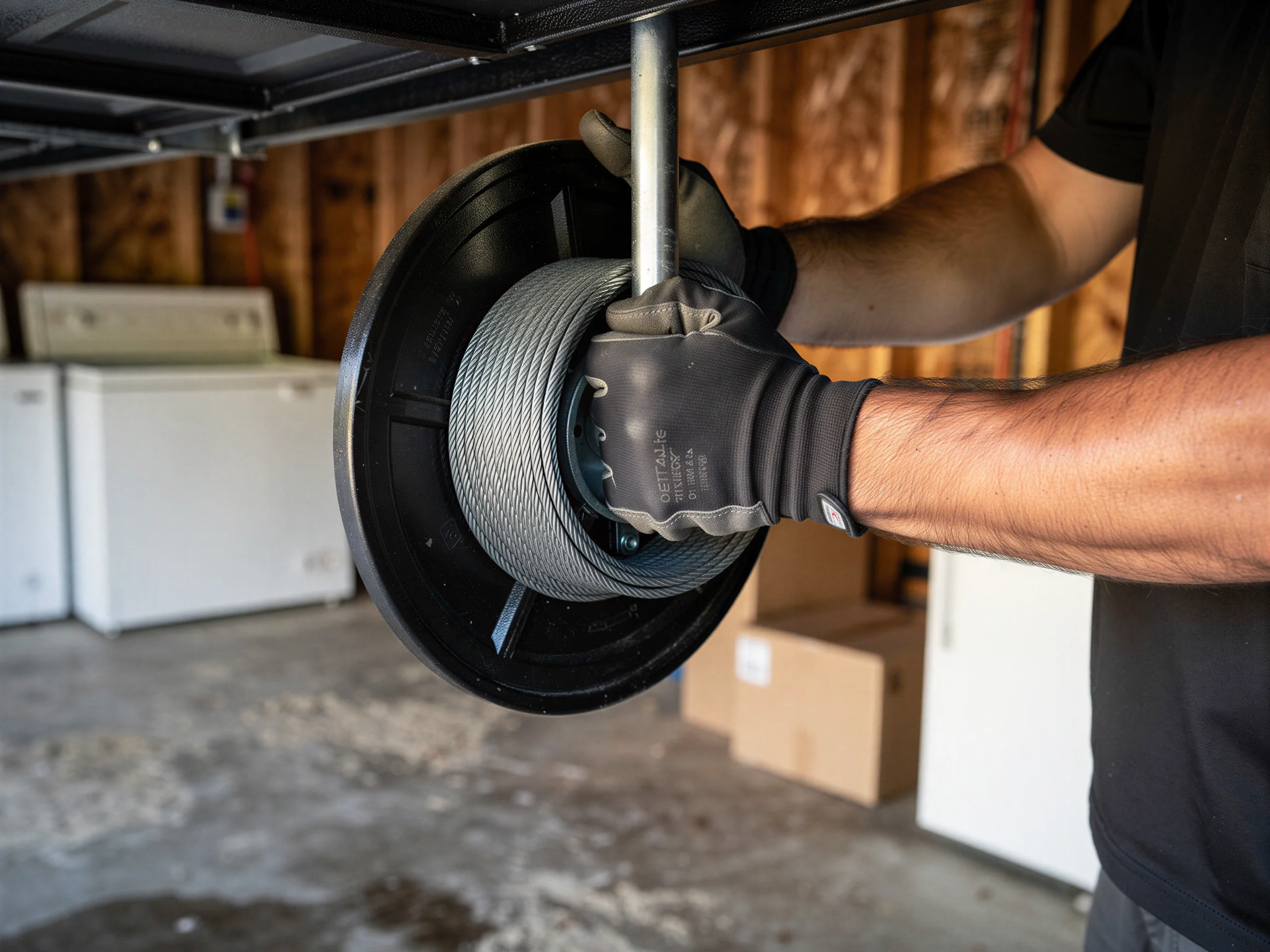
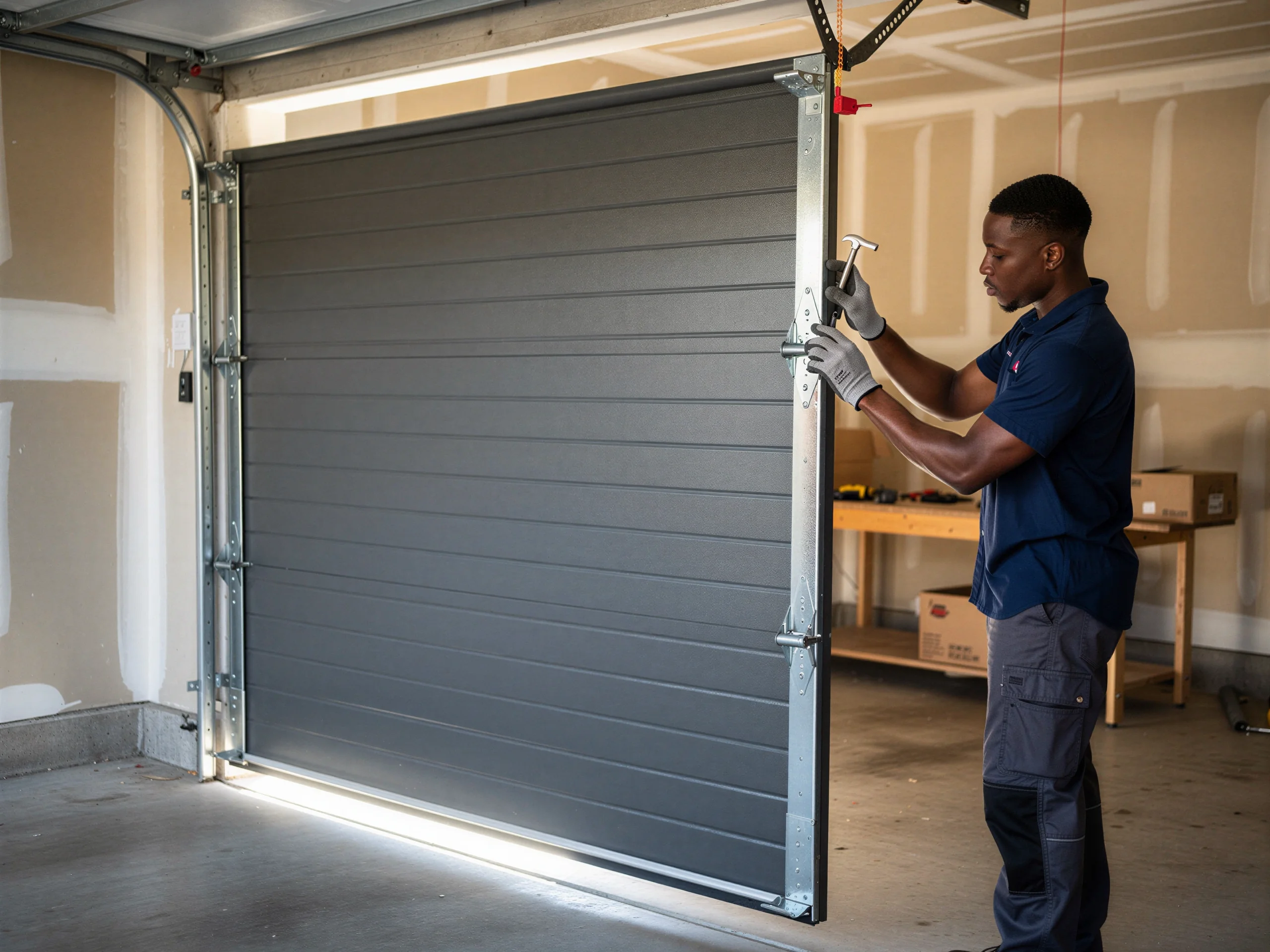
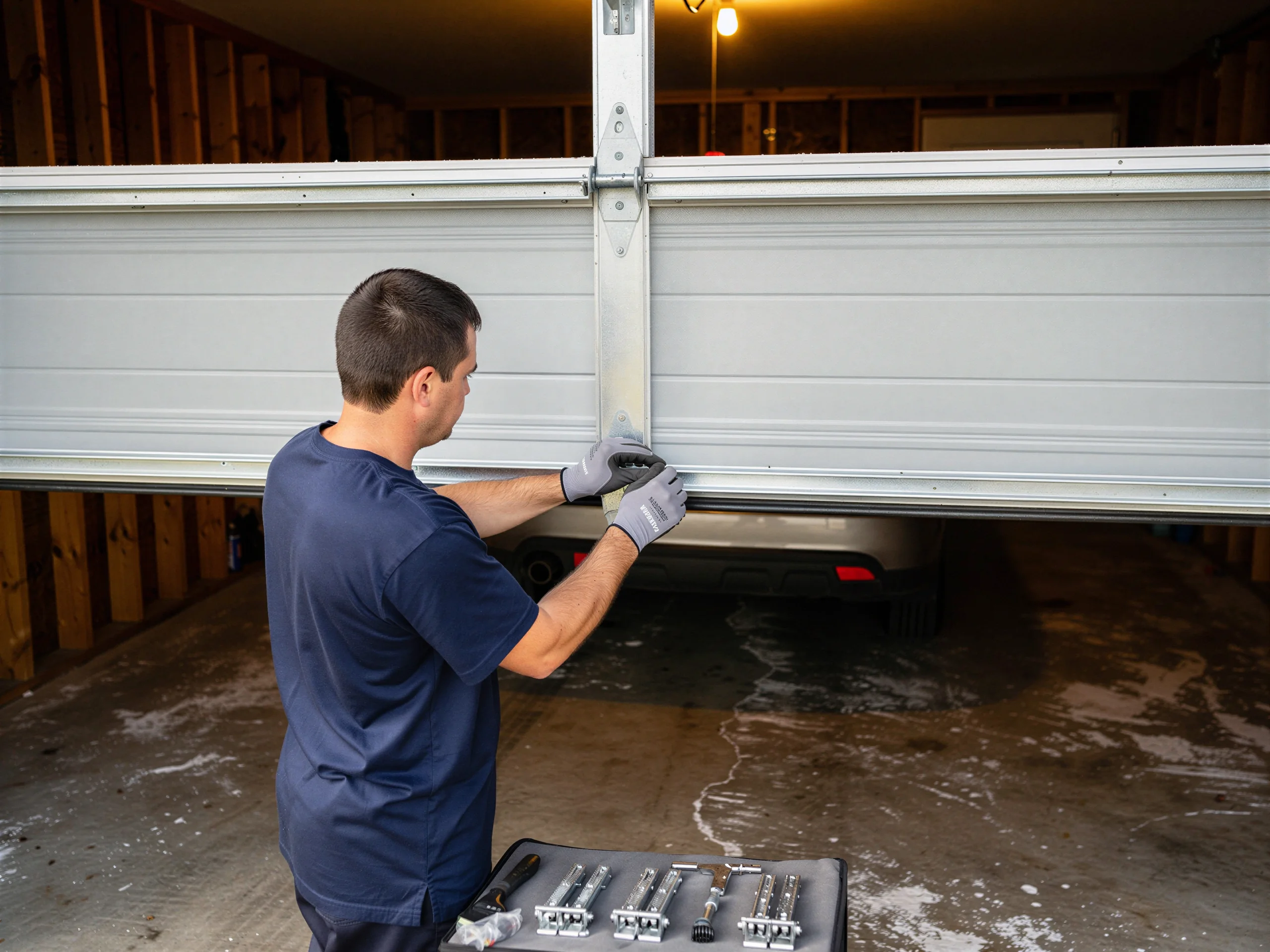
Given the age of the housing stock, the calls we get from Pleasant Ridge lean toward torsion spring replacement on original or near-original track systems, and cable and roller swaps where decades of use have worn the hardware past safe operating range.
Panel repair comes up too - on a door this old, a single damaged panel often can't be color- or profile-matched, so the honest fix is sometimes a full door rather than a patch.
We also see a fair number of opener upgrades - not because the opener failed outright, but because owners replacing original hardware want something that works with a low-headroom, narrow-bay garage built for cars half the size of what people drive now. Given the severe cold here, insulation and seal replacement is common too, usually bundled with a spring or cable job rather than done alone.
We don't push full replacement when a repair will hold. But on a door built in that pre-1940s era, there's a point where parts cost and labor on patch jobs add up past what a new door costs, and we'll tell you when you're at that point instead of running the meter.
Typical calls
Most calls start the same way: a door that won't open, or one that opened and then wouldn't close, usually right after a cold snap.
On older torsion hardware, a snapped spring is the single most common reason a Pleasant Ridge door goes dead overnight. Given how small this town is, and how old its housing stock runs, we hear a lot of the same story - door's original to the house, nobody's touched the springs in years, and then one morning it just lets go.
The other recurring call is about noise - grinding, popping, or a door that shudders partway through its travel. On a track system this old, that's almost always worn rollers or a bent track section rather than anything electrical. We also get calls from owners who've had a newer opener installed on original 1930s-era track and are running into fit and alignment issues nobody warned them about at the time of installation.
We travel from Royal Oak for these jobs, about 3 miles each way, and we're upfront if a repair needs a part we don't carry - better to tell you that on the phone than after we've opened up the garage.
Service areas
Questions
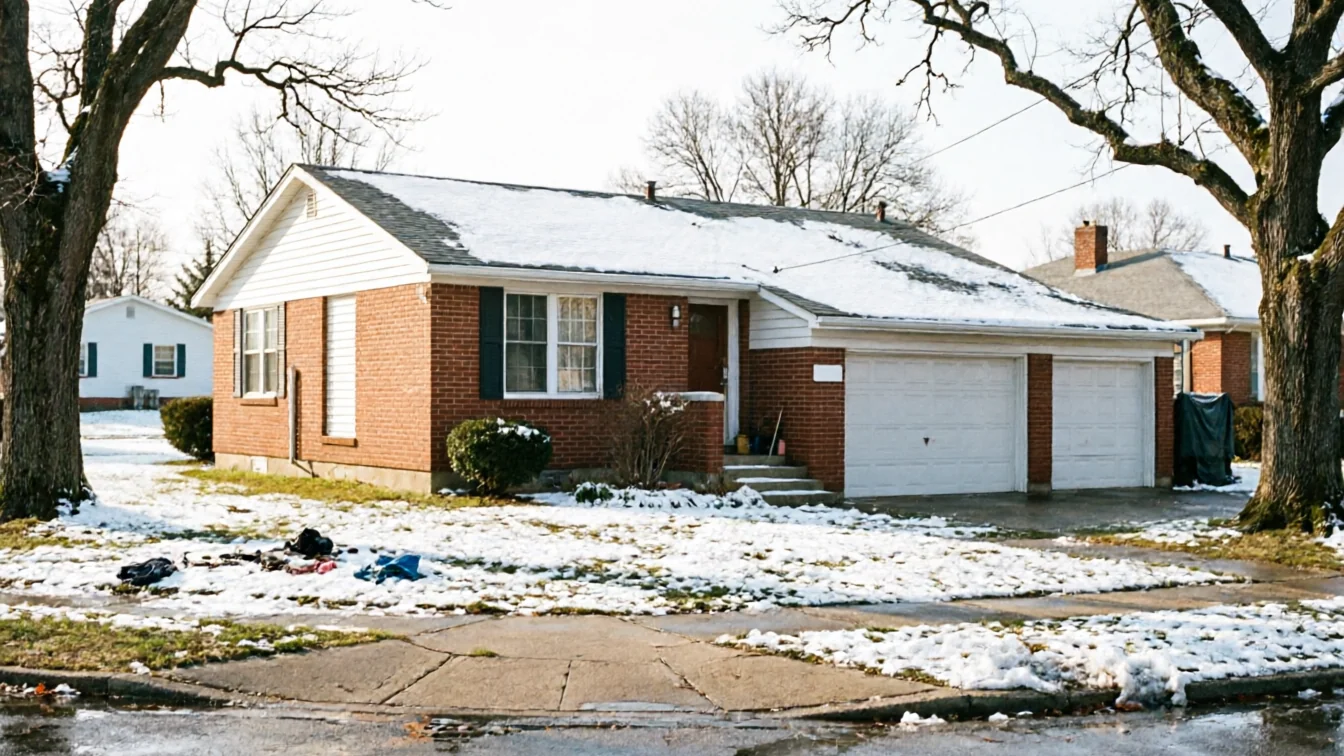
Pleasant Ridge sits in a severe cold climate band, and older steel and springs lose tension and flexibility faster in hard cold. On hardware that's original to a 1938-era build, a spring that's been slowly weakening for years will often finally snap during the first real cold snap of the season.
Not always. A lot of Pleasant Ridge garages still run track and hardware close to original, and some of that doesn't match what's stocked for newer doors. We'll tell you upfront if a part needs to be ordered rather than guess and waste your time.
Depends on the damage. A worn spring, cable, or roller set is almost always worth fixing. A cracked or bent panel on a door this old is a different call - matching parts can be hard to find, and at some point labor and parts on patch jobs cost more than a new door.
We come from Royal Oak, about 3 miles away. It's a short run, not a different coverage zone, so scheduling isn't usually the holdup - parts availability on older hardware is more often the thing that affects timing.
Ready when you are
Royal Oak Garage Door Pros repairs and installs garage doors, springs and openers in Royal Oak, MI and the surrounding area.