Where This Job Goes Sideways
Most of the calls we get from Royal Oak start the same way: a door that worked fine on Tuesday won't budge on Wednesday morning, and it's 18 degrees out.
Torsion setup mismatch
Houses here were mostly built between 1938 and 1990, with a median build year of 1957, which means a lot of garages still run the torsion spring and track setup that came with the house. That hardware was never designed to flex through 60-plus winters of Michigan cold.
Fatigued spring failure timing
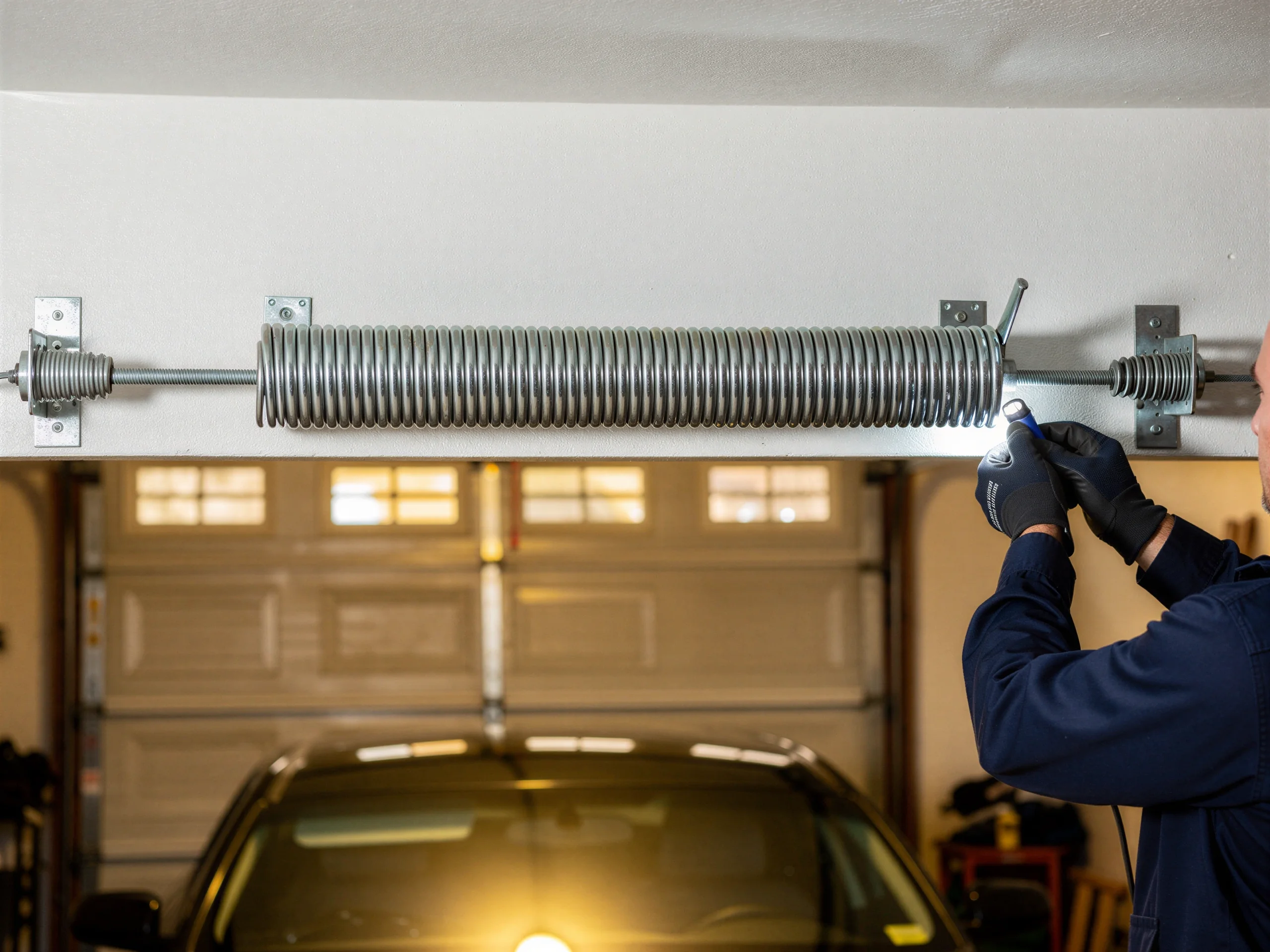
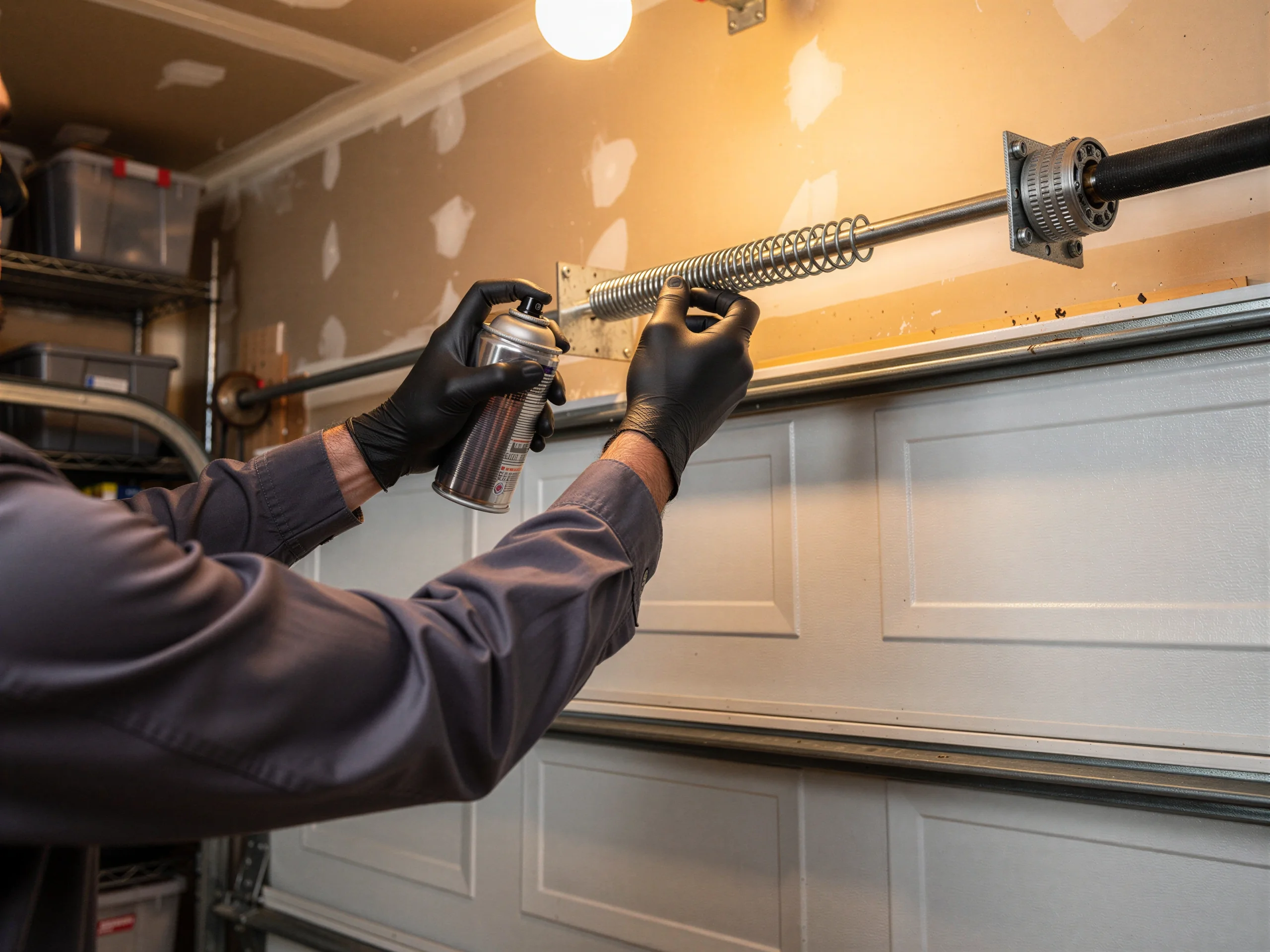
When steel contracts in a severe cold band like ours, a spring that's already fatigued from six decades of cycles is the first thing to give, usually on the coldest morning of the week, not the mildest. The second place it goes sideways is the opener.
Opener on legacy door
A 1960s-era door with a newer opener bolted on top is a mismatch we see constantly - the opener fights hardware it was never sized for, and something downstream (the drive gear, the sensor bracket, the travel limit) takes the hit instead of the spring. Either way, the failure shows up suddenly even though the wear built up for years.
What You Are Seeing
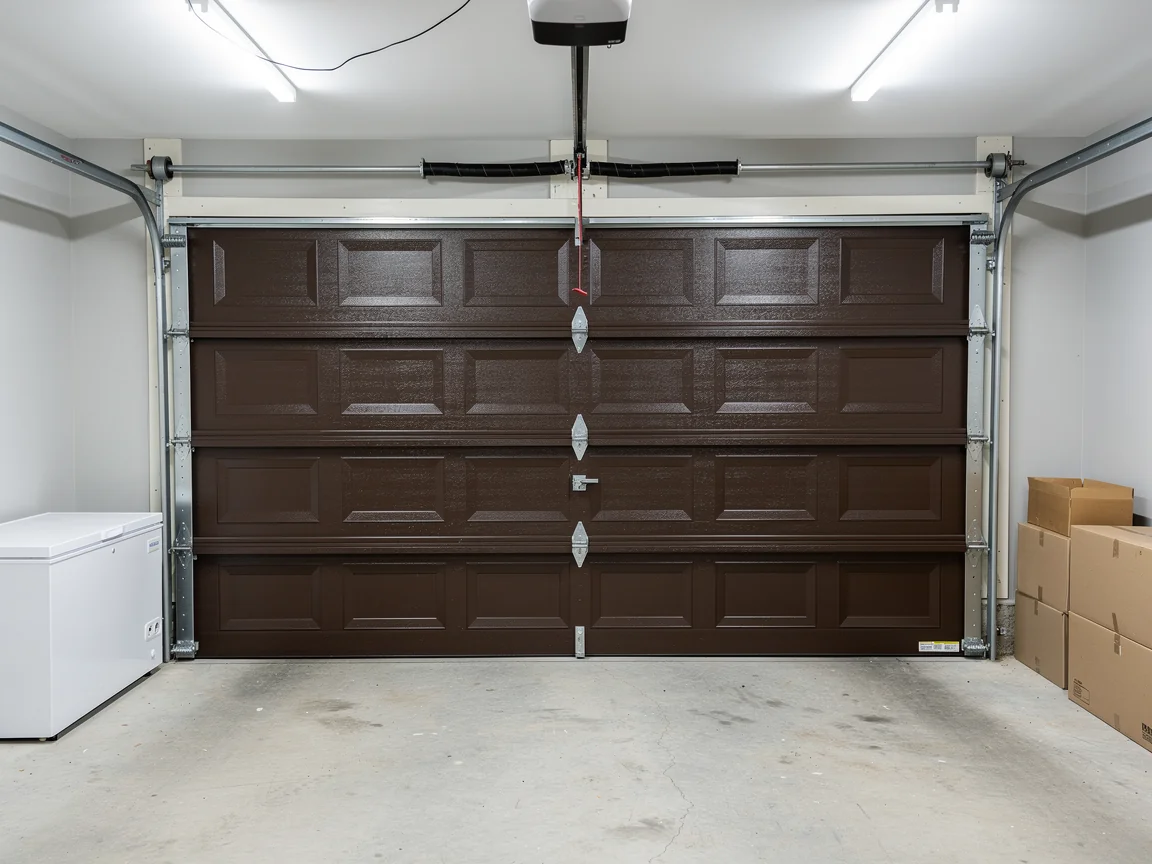
The door stops partway and won't go further, or it slams down the last foot instead of settling. Sometimes it's a loud bang from the garage followed by a door that won't lift at all - that's almost always a broken torsion spring, and on the older one-piece and sectional doors common in this housing stock, that spring is frequently the original, side-mounted unit rather than the center-mounted torsion bar you'd find on a door installed in the last 15 years. You might also see the opener straining, clicking, or reversing on its own near the bottom of the cycle. On colder mornings specifically, lubricant in old rollers and hinges stiffens up, so a door that runs quiet in July can sound like a shopping cart in January. None of these are random. They're what 60-year-old steel and a severe cold climate band do to each other, year after year, until something finally lets go.
What the Fix Involves
A broken torsion spring gets replaced in pairs on most double doors, not as a single spring - that keeps the lift balanced on both sides instead of pulling the door crooked again in a year.
Header bracket soundness
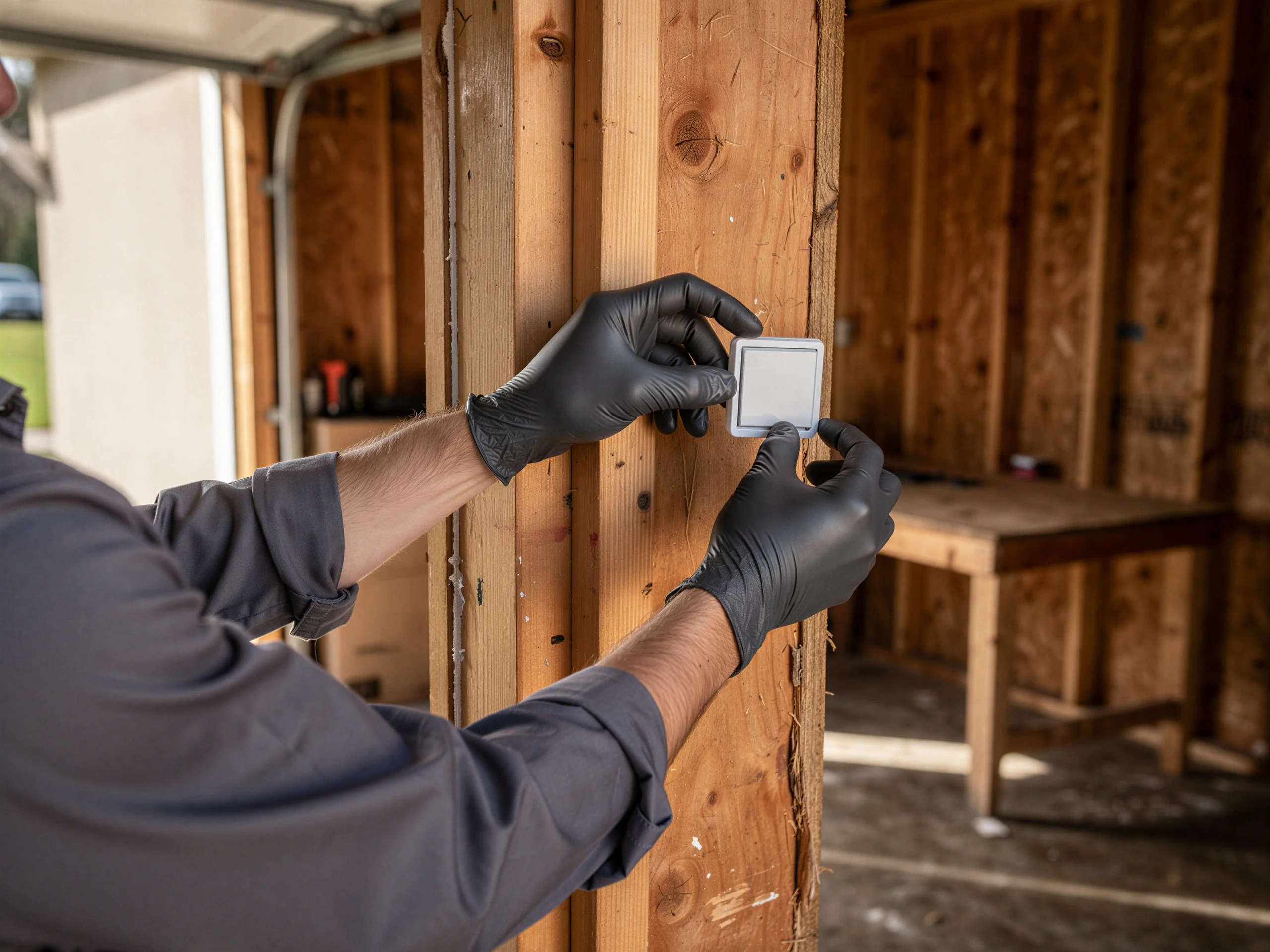
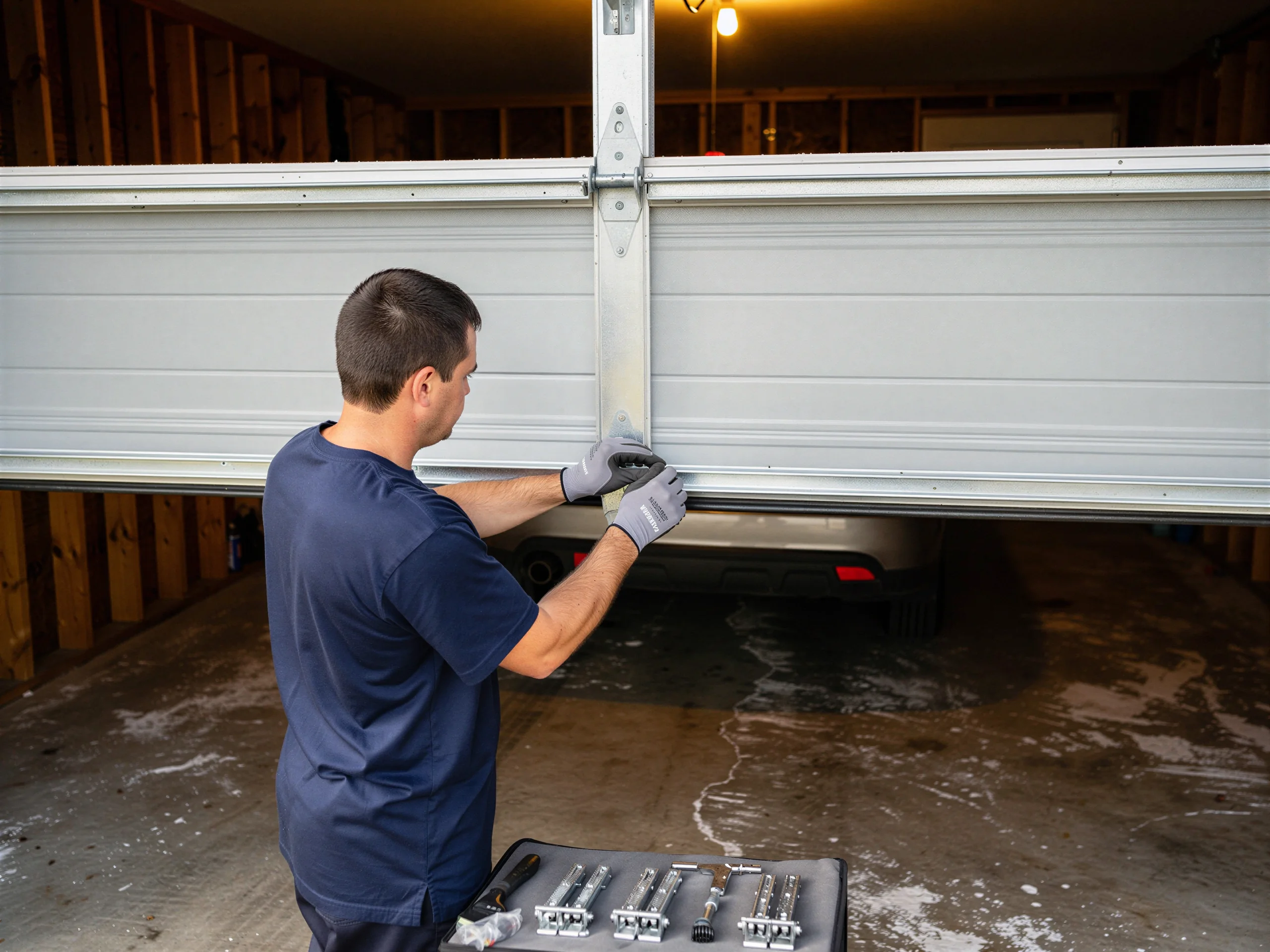
On original side-mounted setups, we check whether the mounting hardware and header bracket are still sound before we trust new springs to them; on houses from the 1940s and 50s that bracket has sometimes rusted or loosened enough that it needs reinforcement before anything else goes back on.
Retrofit opener compatibility
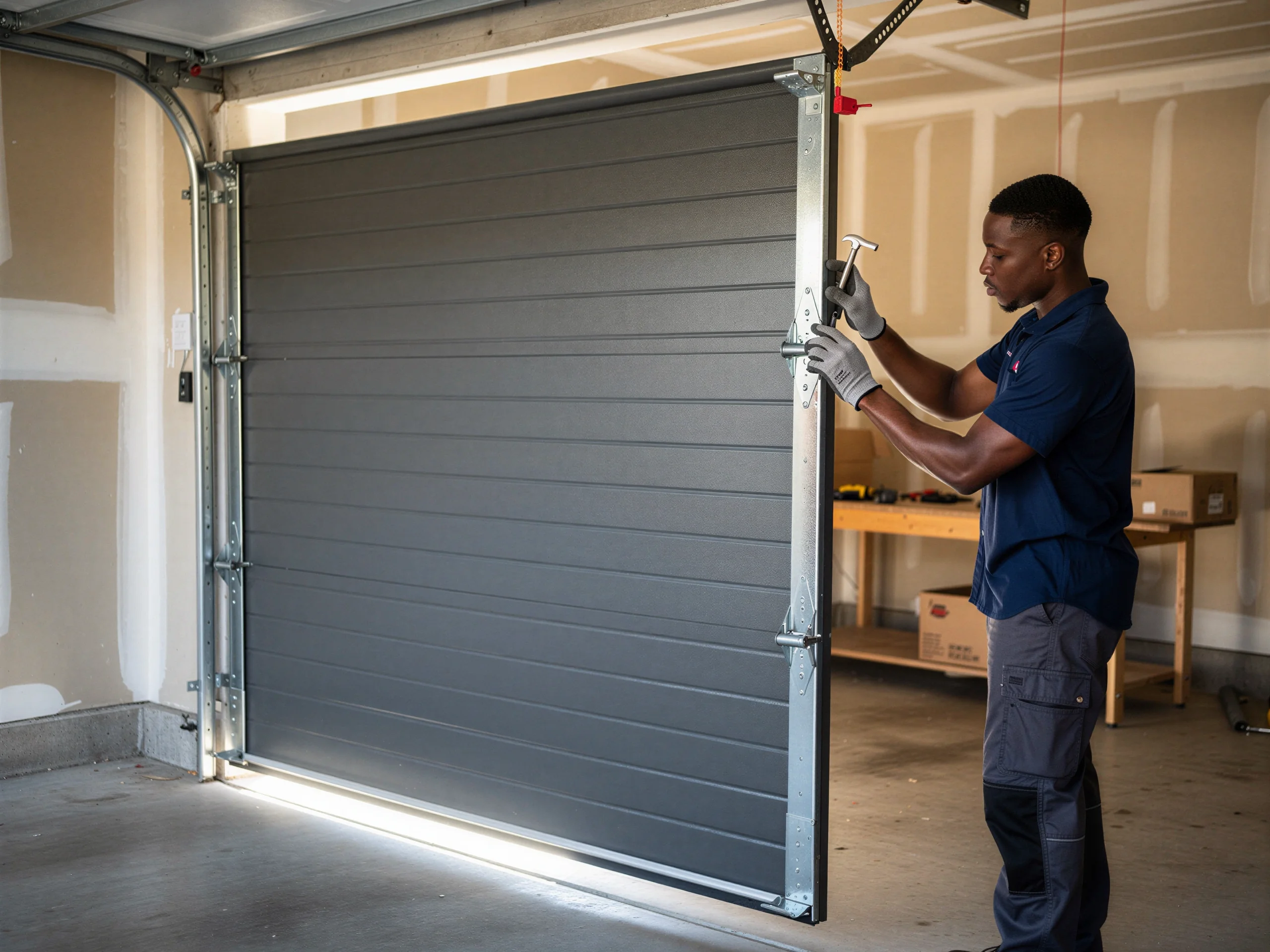
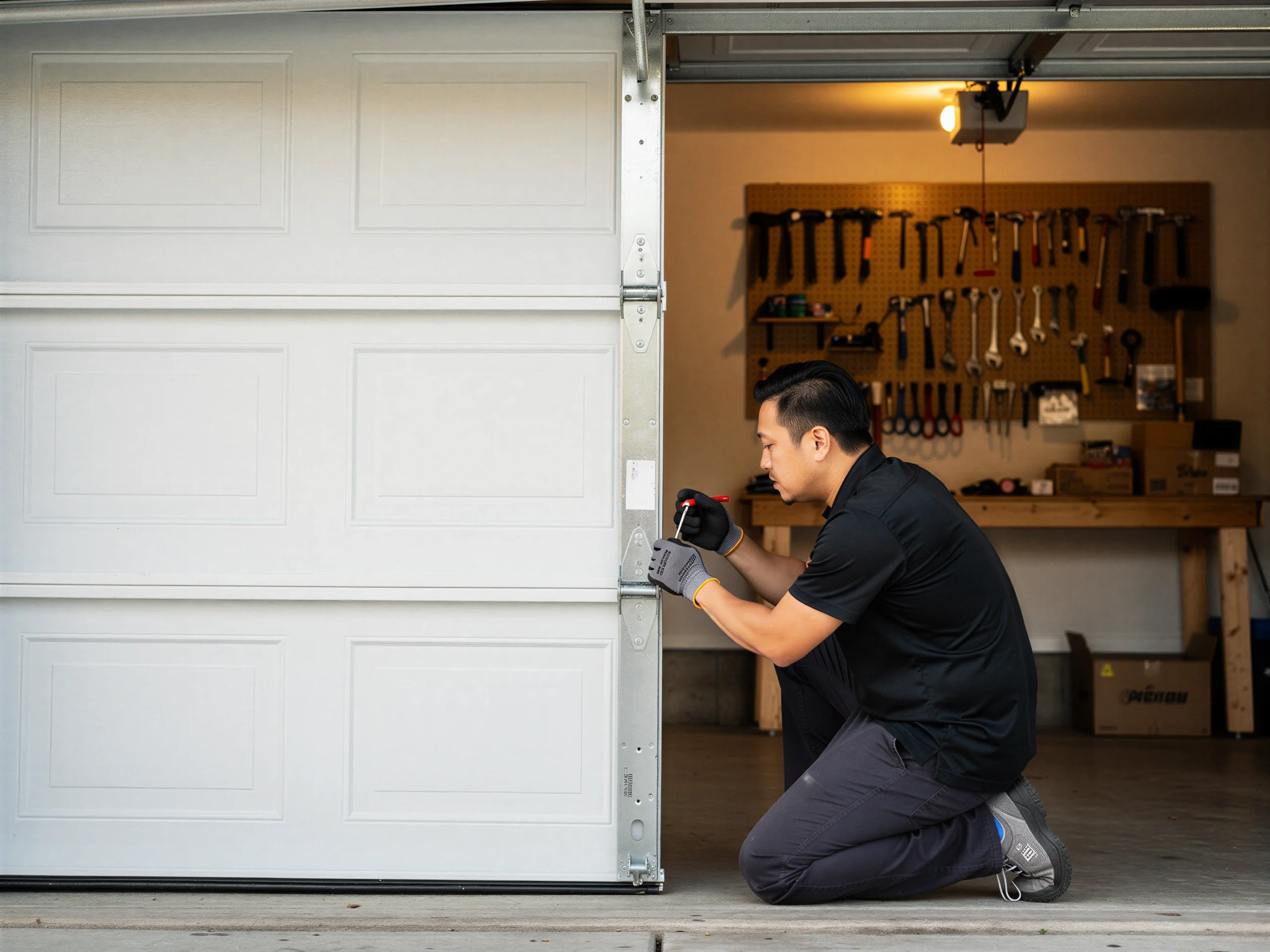
If the opener is the point of failure, we look at whether it's original to the door or a later retrofit, because a retrofit opener paired with old track and rollers often needs the rollers and hinges replaced at the same time or the new opener just inherits the same strain.
Stop-repairing threshold
One honest limitation: if the door itself is warped, rusted through, or the track is bent beyond adjustment, we'll tell you that replacement is the better call rather than stacking repairs on a door that's past the point of being worth it.
What Causes It Around Here
The root cause is the combination, not either factor alone. Housing in Royal Oak and the close-in area - Berkley two miles off, Huntington Woods and Pleasant Ridge within three miles, Ferndale and Oak Park close by as well - is mostly pre-1960 stock across the 45 named areas in this part of the county, so a lot of these garages have never had the springs or hardware swapped since the house was built. Pair that with a severe cold climate band and you get steel fatigue that would take much longer to show up somewhere milder. It isn't neglect on the homeowner's part - it's just what happens to a 60-plus-year-old torsion spring every time the temperature swings hard through a Michigan winter. Newer subdivisions built after 1990 don't show this pattern nearly as often, because the hardware simply hasn't had the decades of cold cycling yet.
Talk to a local pro
Garage door service in Royal Oak?
Same-day service with honest, upfront quotes.