The DIY Question
Pleasant Ridge sits about 3 miles from our shop in Royal Oak, and the housing stock here runs older than what we see across the rest of the area we cover.
Original wiring limits
The broader service area has a median build year of 1957; Pleasant Ridge's own median is 1938. That matters for an opener call because a house built in the late 1930s was never wired with a garage in mind the way a 1950s or 1960s build was - openers here are often retrofits bolted onto framing that predates the device by decades, sometimes with wiring runs added well after the fact.
Multimeter-level DIY limits
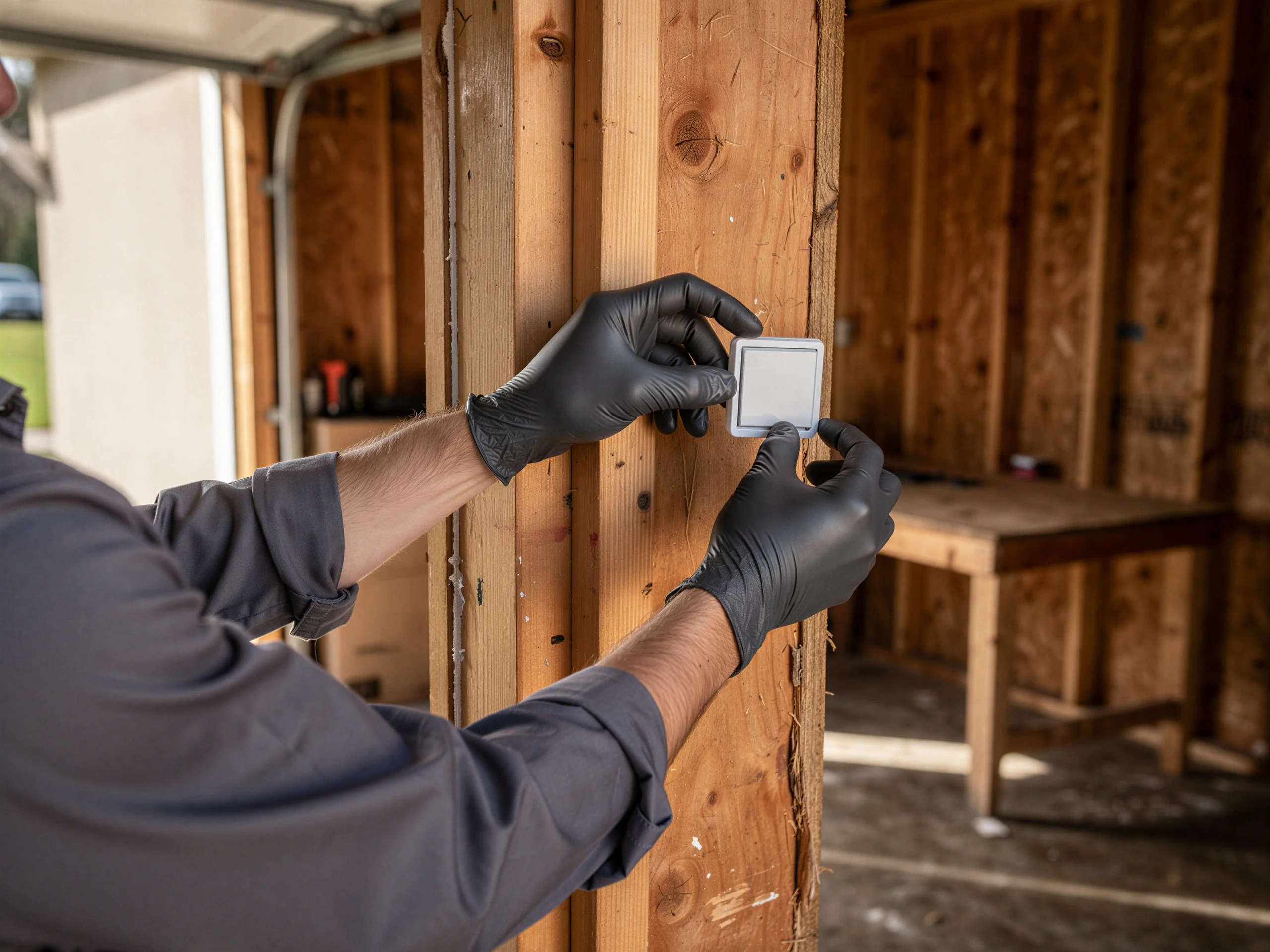
If you're comfortable with a multimeter and know your way around a breaker panel, swapping a logic board or a wall control is within reach. What isn't a good DIY move is chasing an intermittent fault on an opener mounted to old, possibly undersized framing - if the bracket flexes when the door cycles, that's a structural problem wearing an electrical disguise.
Limited brand mix
With only 1,173 households in Pleasant Ridge, this isn't a market with a dozen opener brands in rotation; most of what we see here are the same handful of makes that were common when these houses were built out, plus whatever's been swapped in since.
How to Book
We run this job out of Royal Oak, about 3 miles from Pleasant Ridge, so there's no separate branch or local depot - just a short drive. Tell us the opener's age and symptom when you call: dead at the wall button, dead at the remote, grinding but not lifting, or lights blinking with no movement. That narrows down what's riding on the truck before we're in your driveway. We don't carry every control board for every opener ever sold, so if yours is an older or discontinued model, we may need to order a part rather than fix it on the first visit - that's a lead-time issue, not a diagnosis problem, and we'll tell you straight if that's the case.
Where This Job Goes Sideways
The complication in a city like Pleasant Ridge is age stacked on top of age. A house built in 1938 has usually had at least one, often two, opener replacements since - and whoever did the last swap may not have touched the original mounting hardware, the header bracket, or the wiring left behind from the first installation.
Tracing old wiring
We've opened junction boxes here that still had cloth-insulated wire spliced into a modern run. None of that is automatically dangerous, but it means a straightforward-sounding opener call can turn into tracing down which wire actually goes where before we can even test the new part.
Smart controls and backup
Median household income in Pleasant Ridge runs $161,058, well above the area median of $70,185, and higher-end finished garages sometimes come with integrated smart controls or battery backup units added on top of the base opener - that's another layer to check before assuming the opener itself is the fault.
How Long It Takes
A straightforward logic board, sensor, or remote swap is usually a single visit once we've confirmed the part fits. What stretches it out in Pleasant Ridge specifically is the age of the mounting and wiring behind the opener - if we find old wiring that needs to be redone to code before we reconnect a new control, that adds time on-site. We're in a cold-climate region, and cold makes some opener faults worse: a circuit board that tests fine at 70 degrees can drop out at 20, so winter calls sometimes take an extra visit just to catch the fault reproducing itself in the cold it actually fails in.
What You Are Seeing
The most common complaint we get from this part of the area is a door that reverses right after it starts to close, or an opener that hums without moving the door at all.
Opener overworking on door
On houses from this era, that's often the opener compensating for a door and track assembly it was never matched to - a newer opener motor muscling a heavier, older wood or early steel door.
Remote versus wall button
You'll also see openers that respond to the wall button but not the remote, which almost always points to a dead coin battery or a receiver that's lost its programming rather than anything structural. Flickering opener lights with no motor response usually means a capacitor or board issue, not the bulb.
What the Fix Involves
Once we've confirmed the opener itself is the fault and not the door, spring, or track feeding it bad signals, the fix is usually one of three things: a logic board swap, a replacement travel or force sensor, or a full opener replacement when the motor itself has given out. On a house with original or near-original garage framing, we check the header bracket and mounting bolts before hanging a new unit - old lumber doesn't always hold a lag bolt the way it did new. We don't recommend patching a 20-plus-year-old opener with one part after another; past a certain point, replacement costs less over time than a string of individual repairs.
Talk to a local pro
Garage door service in Royal Oak?
Same-day service with honest, upfront quotes.