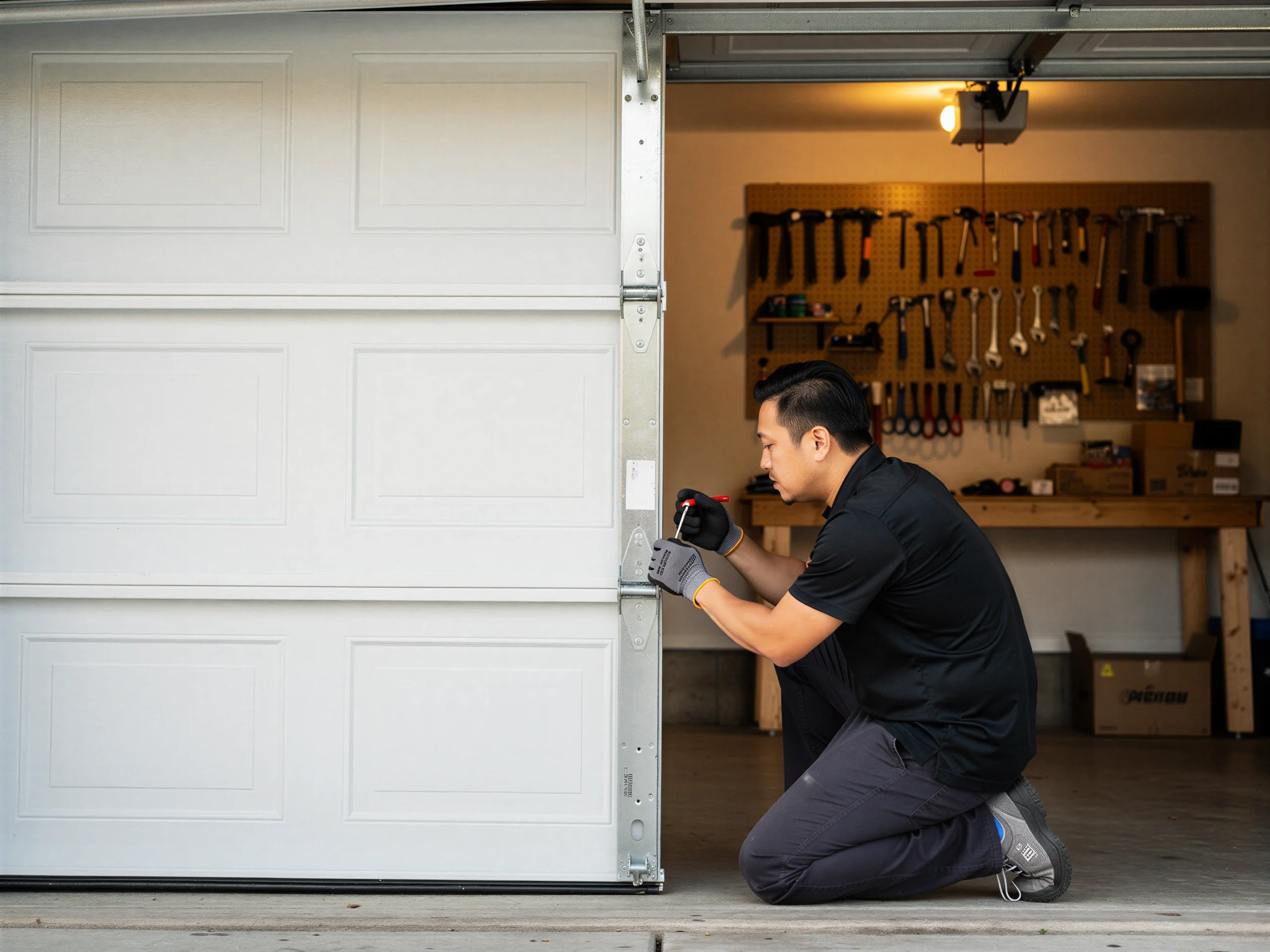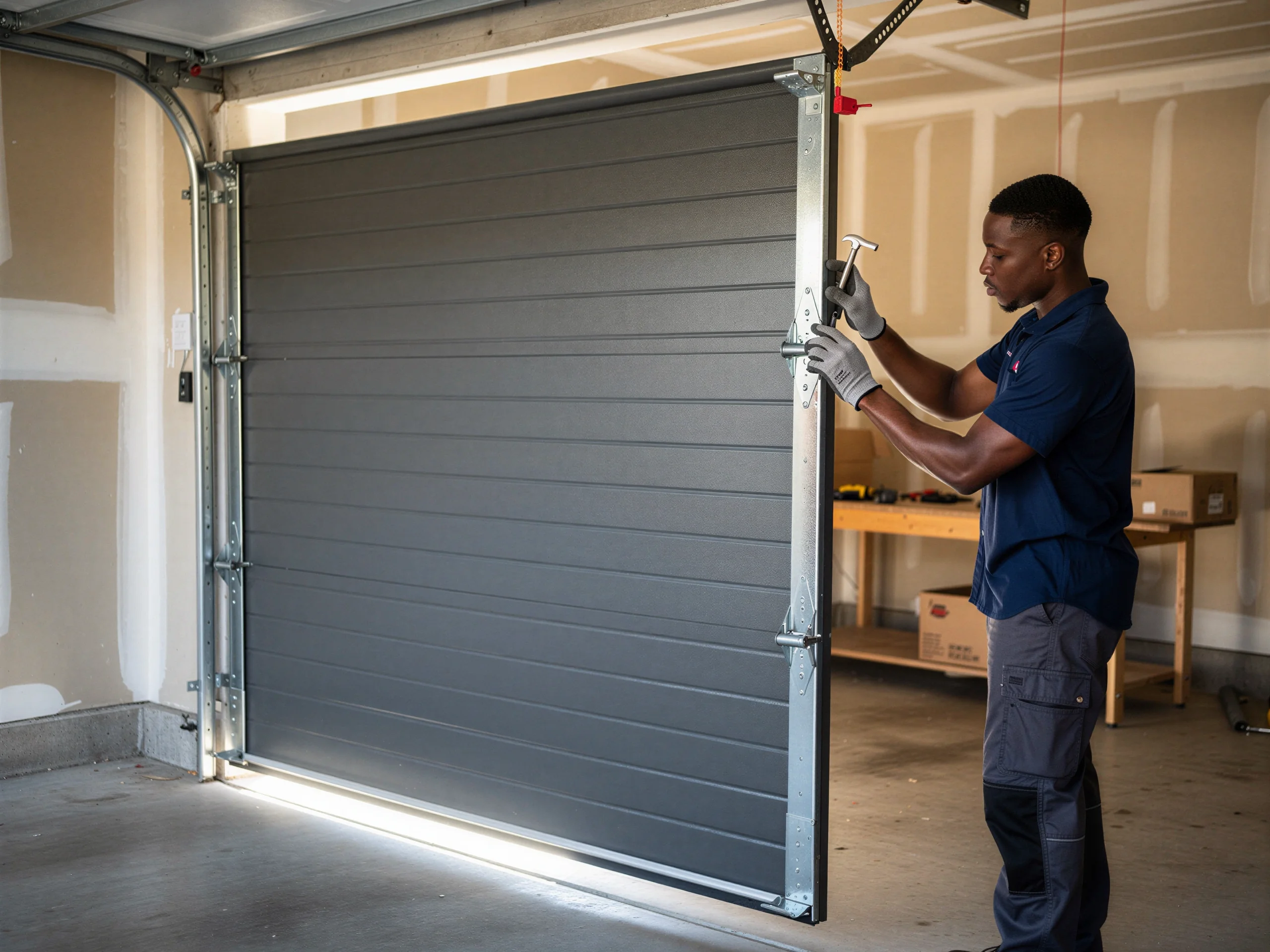
Parts We Carry
A house built around 1951 was not built with a garage door kit from a big box store. It got a door hung by whoever was framing the house, on torsion or extension springs sized for whatever the builder had on the truck that week.
Side-mounted torsion stock
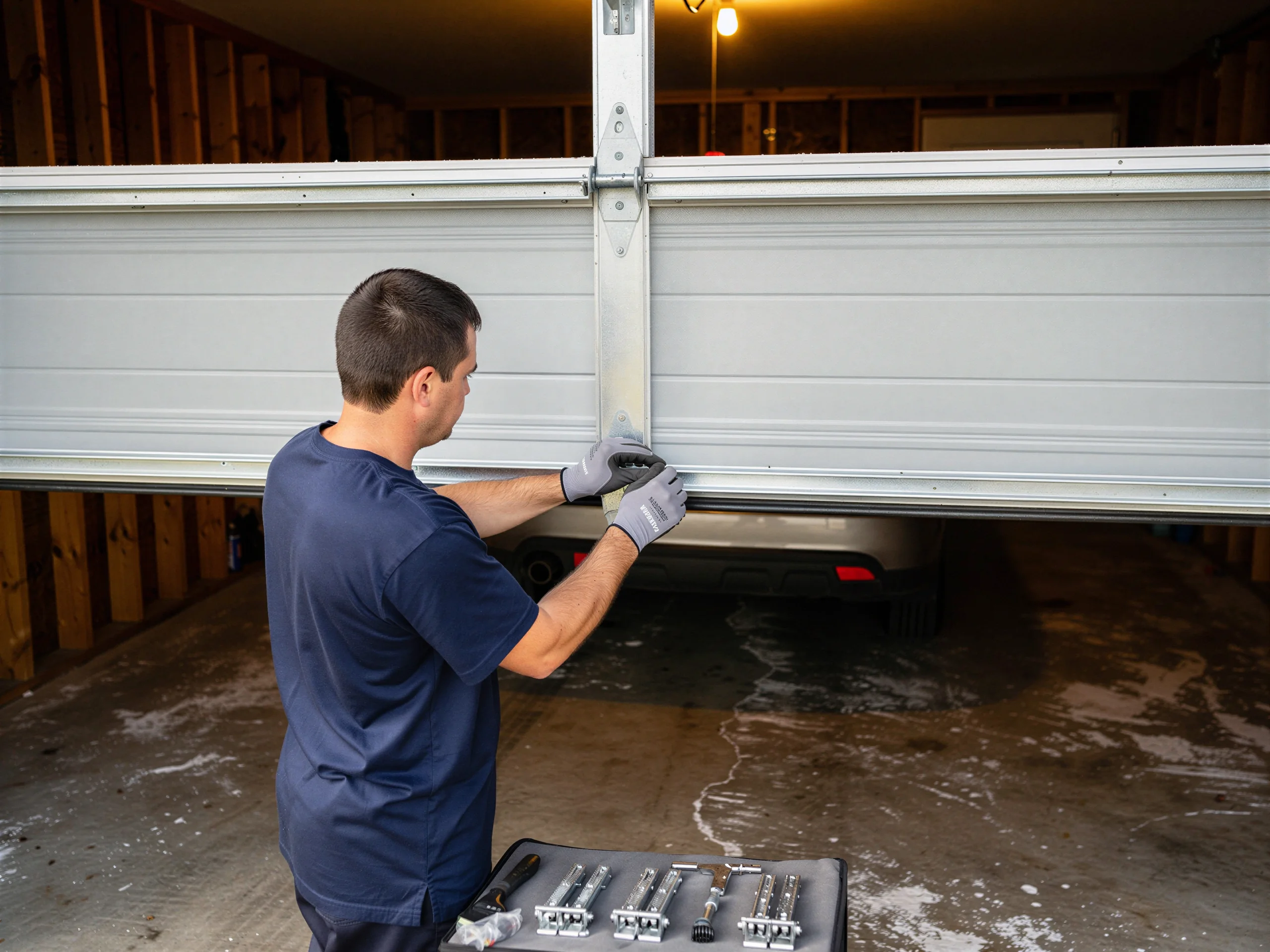
We carry both spring types, plus the rollers, cables, and drums that match side-mounted torsion setups, because that's what you still find on a good share of the original garages in this part of the service area.
Safety cable additions
We also stock standard safety cables for extension-spring doors - a part that simply didn't exist when these houses were framed, and one we add any time we're already inside the spring system.
Odd torsion size waits
What we don't carry on the truck is obsolete hardware for a handful of odd torsion sizes from that era; if your door has one of those, it may mean a short wait on a part rather than a same-visit fix. We'll tell you up front if that's the case instead of guessing at it on the phone.
Where This Job Goes Sideways
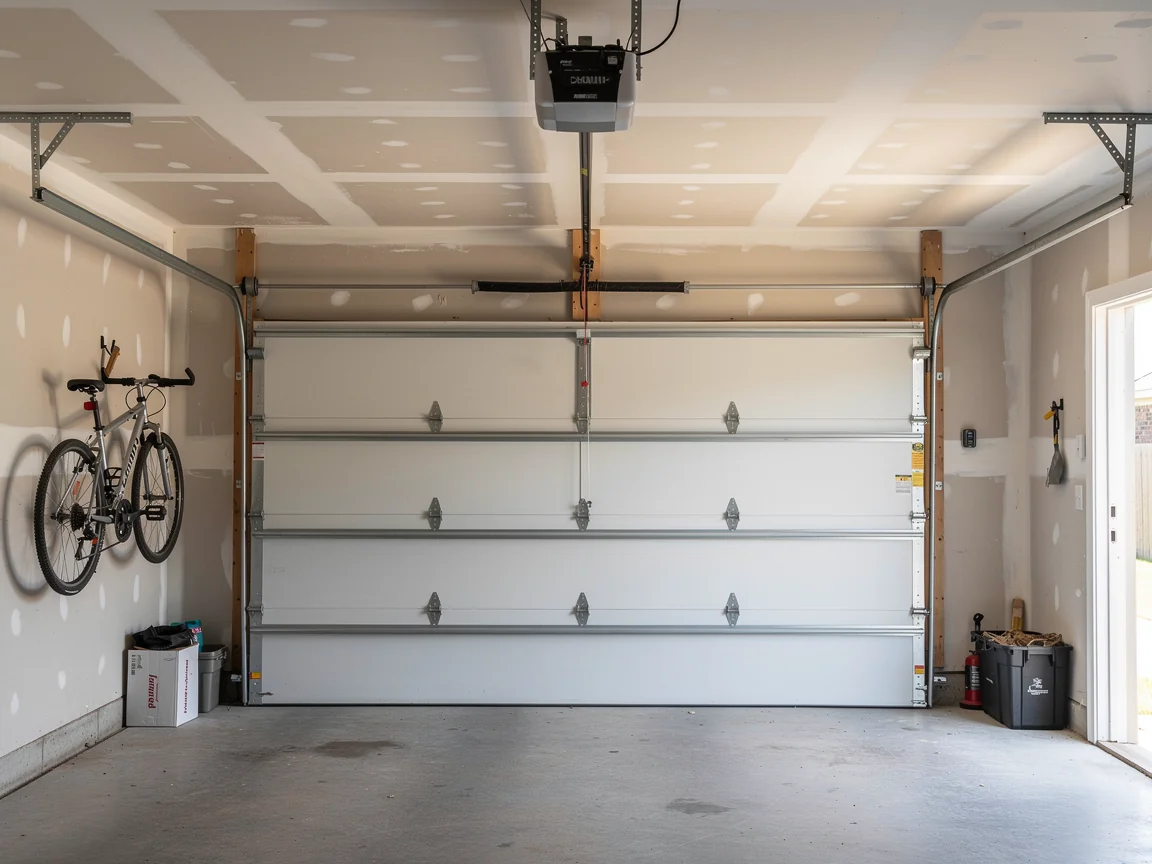
The failure point on a 1951-era door is almost never the part you called about. You call because the door won't open, we find a broken spring, and underneath that spring is a drum or a cable that's been quietly wearing for decades with no safety cable to catch it if it lets go. On a house this age, pulling one worn part usually means finding two more. The other way this goes sideways: a door that's been painted over multiple times, where the panel seams are sealed shut and a simple roller swap turns into prying apart hardware that hasn't moved since the Eisenhower administration. Neither of these is unusual for homes built around 1951 - it's just what original hardware does after seventy-plus years, and it's why a five-minute phone estimate on an old door is usually wrong.
What You Are Seeing
If your garage dates to the early 1950s, the door itself is probably already a replacement, but the track, the springs, or the opener mount is often original or close to it.
Dropping door symptoms
Common symptoms: the door drops fast and hard instead of lowering on its own weight, a loud bang from the spring area, a door that's heavy to lift by hand once the opener is disengaged, or a track that's pulled slightly away from the jamb on one side.
Spring tension diagnosis
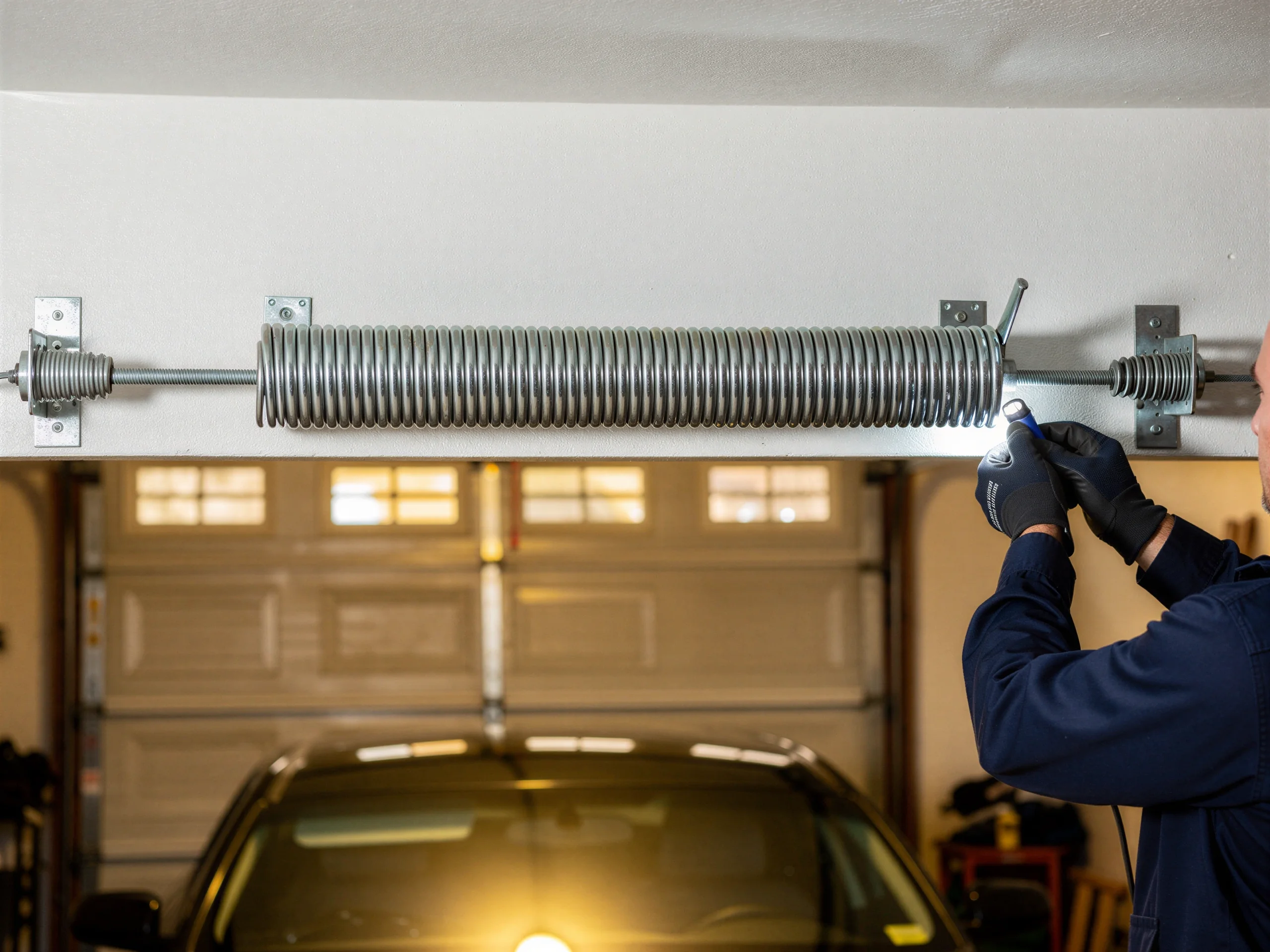
On a house this age, a heavy, hard-to-lift door is usually a spring that's lost tension, not an opener problem - and running the opener against a dead spring is how openers burn out early.
What Causes It Around Here
This region sits in a cold, severe climate zone, and that matters more on 1951-era hardware than on anything newer. Steel springs and tracks installed before modern coatings were standard lose tension and corrode faster through repeated freeze-thaw cycles, and a track that's even slightly out of alignment in summer will bind hard once temperatures drop. Across the wider service area, most housing stock still dates to before 1960, so this isn't a one-house problem - it's the baseline condition of garages built in that window. Add decades of winter salt tracked in on tires and you get the rust-seized rollers and corroded cable ends we see constantly on doors from this era.
The DIY Question
Rollers, weatherstripping, and tightening loose hardware - fine to do yourself if you're comfortable on a ladder. Springs are not.
Stored spring tension risk
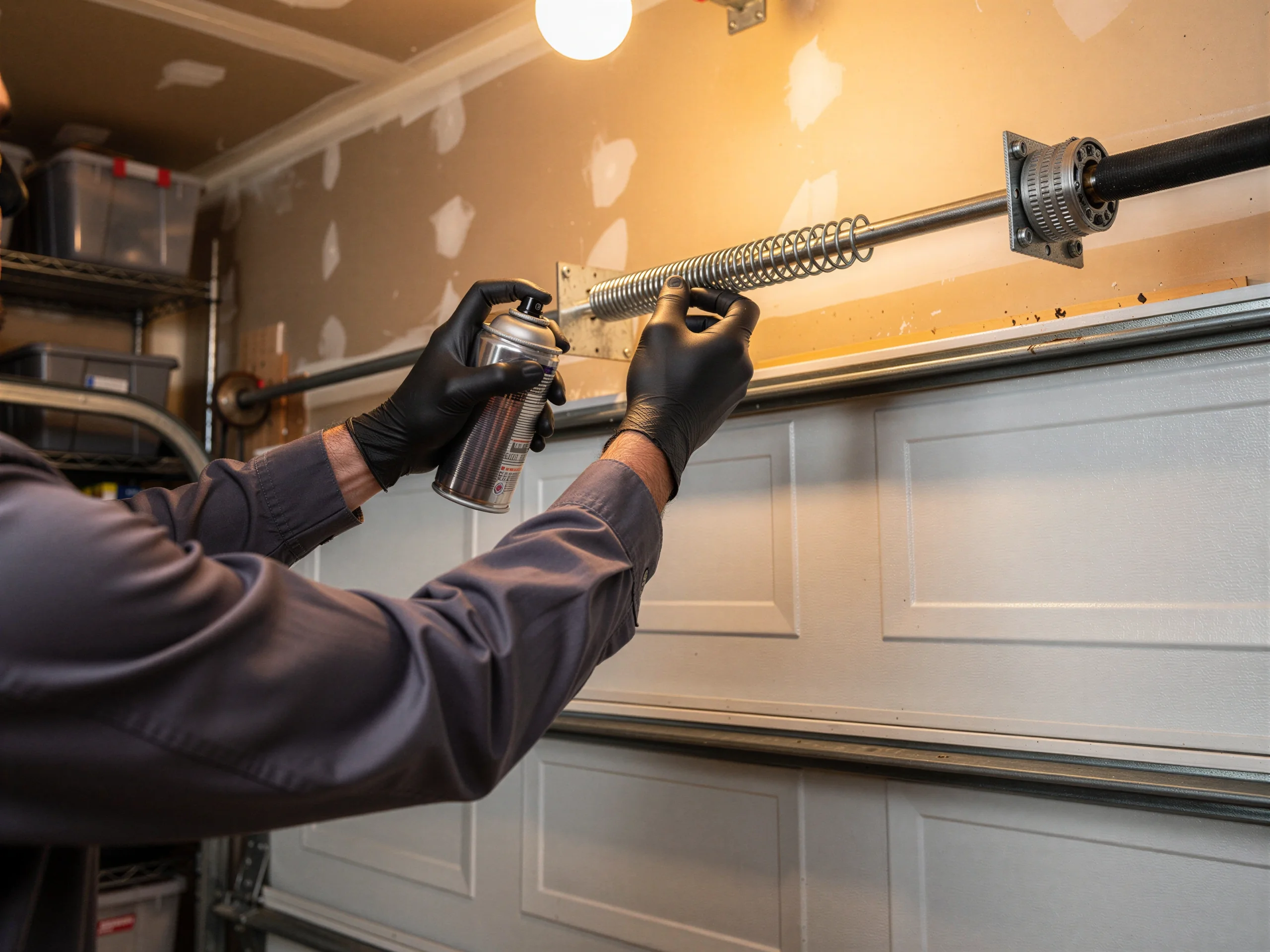
A torsion spring on an original 1951 setup is under enough stored tension to break a wrist or worse, and the winding bars and clamps needed to do it safely aren't things most homeowners own or want to learn on their one garage door.
No remote spring coaching
We also won't talk you through a spring swap over the phone, and we'll say so if you ask - it's not a job we'll walk a homeowner through remotely, on this hardware or any other.
How Long It Takes
We work out of Royal Oak, about 2 miles from Huntington Woods, so getting to the job isn't the long part - diagnosing original hardware is. A straightforward spring or roller swap on newer gear is quick. On a door with 1950s-era torsion hardware, we budget extra time to check the drums, cables, and track alignment while we're already in there, because on houses this old those parts tend to fail as a set rather than one at a time. If a part turns out to be an odd legacy size, the job may need a second visit once it's sourced - we'd rather tell you that than rush a fix on hardware this old.
Talk to a local pro
Garage door service in Royal Oak?
Same-day service with honest, upfront quotes.